An upper-level car park deck is in fact a roof. The coating chosen there takes on not only abrasion but also keeping the level below dry.

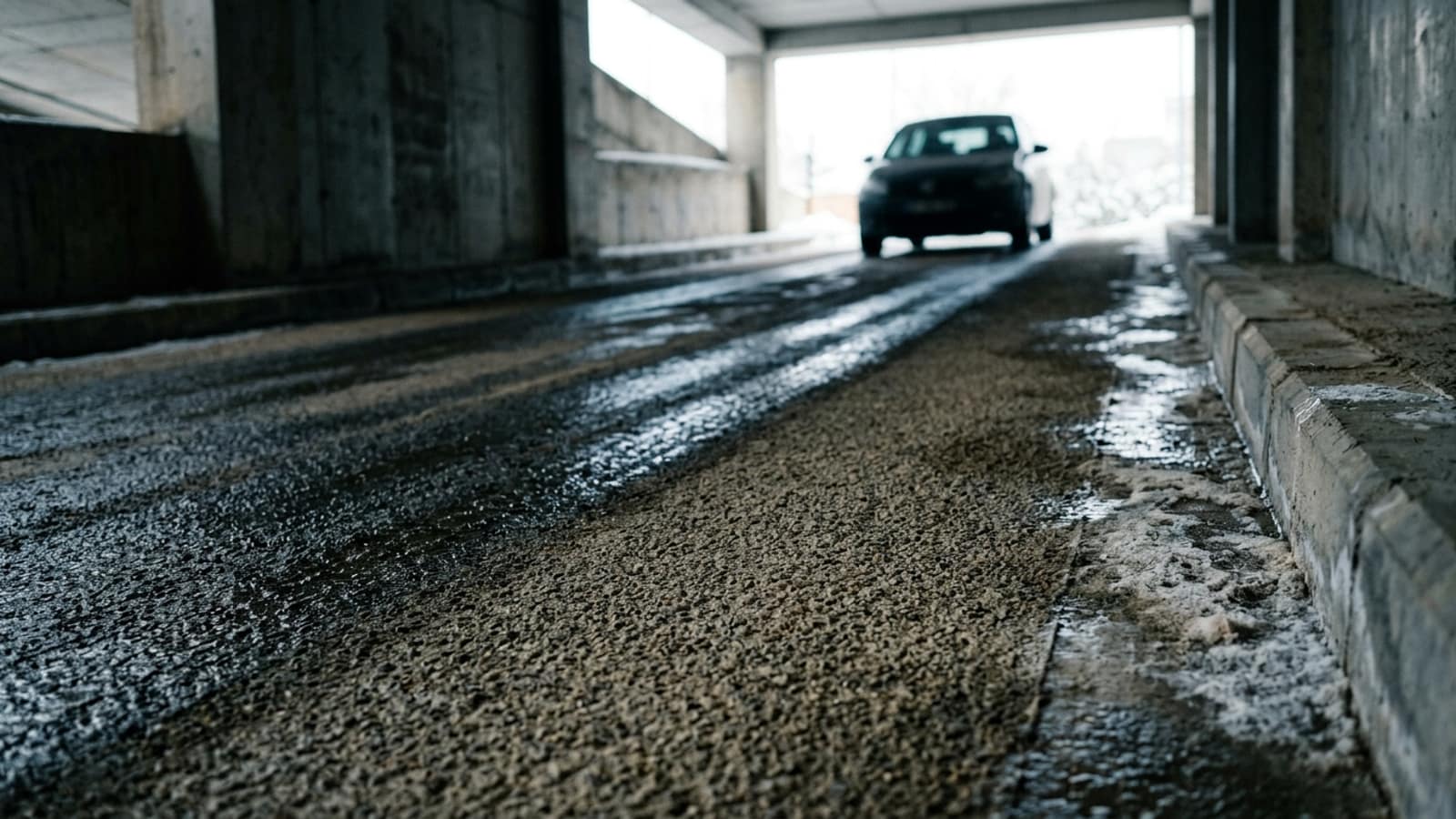
A car park is the most heavily stressed yet least discussed surface in a building. Vehicle loads, the horizontal forces of braking and manoeuvring, the salt and water carried in on tyres in winter, the temperature differences that build up on ramps in summer — all of it comes together on the same floor. What is more, on upper levels this floor is at the same time a roof for the level below.
In this article we treat the car park floor as two separate problems: surface performance (abrasion, slip, cleaning, appearance) and waterproofing (preventing water passing through to the level below). We then cover details specific to car parks such as ramps, line marking and wayfinding.

An upper-level car park deck is in fact a roof. The coating chosen there takes on not only abrasion but also keeping the level below dry.
Ahmet Toka, General Manager
In enclosed car parks at ground level or in contact with the soil there is no space below to protect; the priority is surface performance.
On decks that carry vehicle traffic and have occupied space beneath them, two jobs are expected of the coating at once: resisting abrasion and keeping water out. This narrows the system choice.
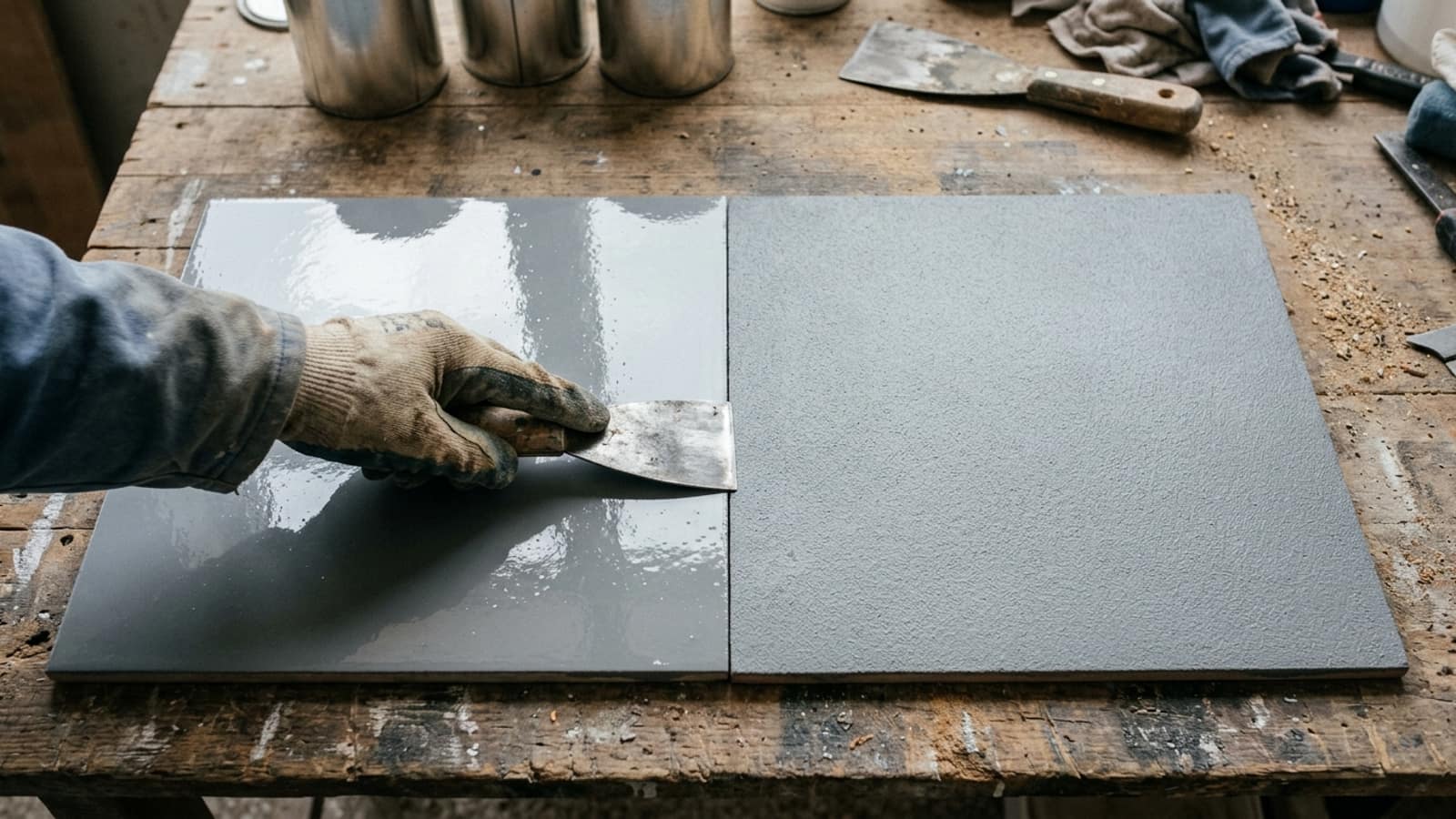
The systems used on such surfaces are generally layered: primer, elastic waterproofing layer, wearing layer and top coat. The elastic layer bridges movement and hairline cracks in the deck, while the wearing layer takes the traffic. On open levels the top coat must be aliphatic for UV resistance.
On projects with heavy traffic that need to be back in service quickly, polyurea systems are also used; the ability to open to traffic within hours can be decisive for operators. For the waterproofing side as a whole see waterproofing page.
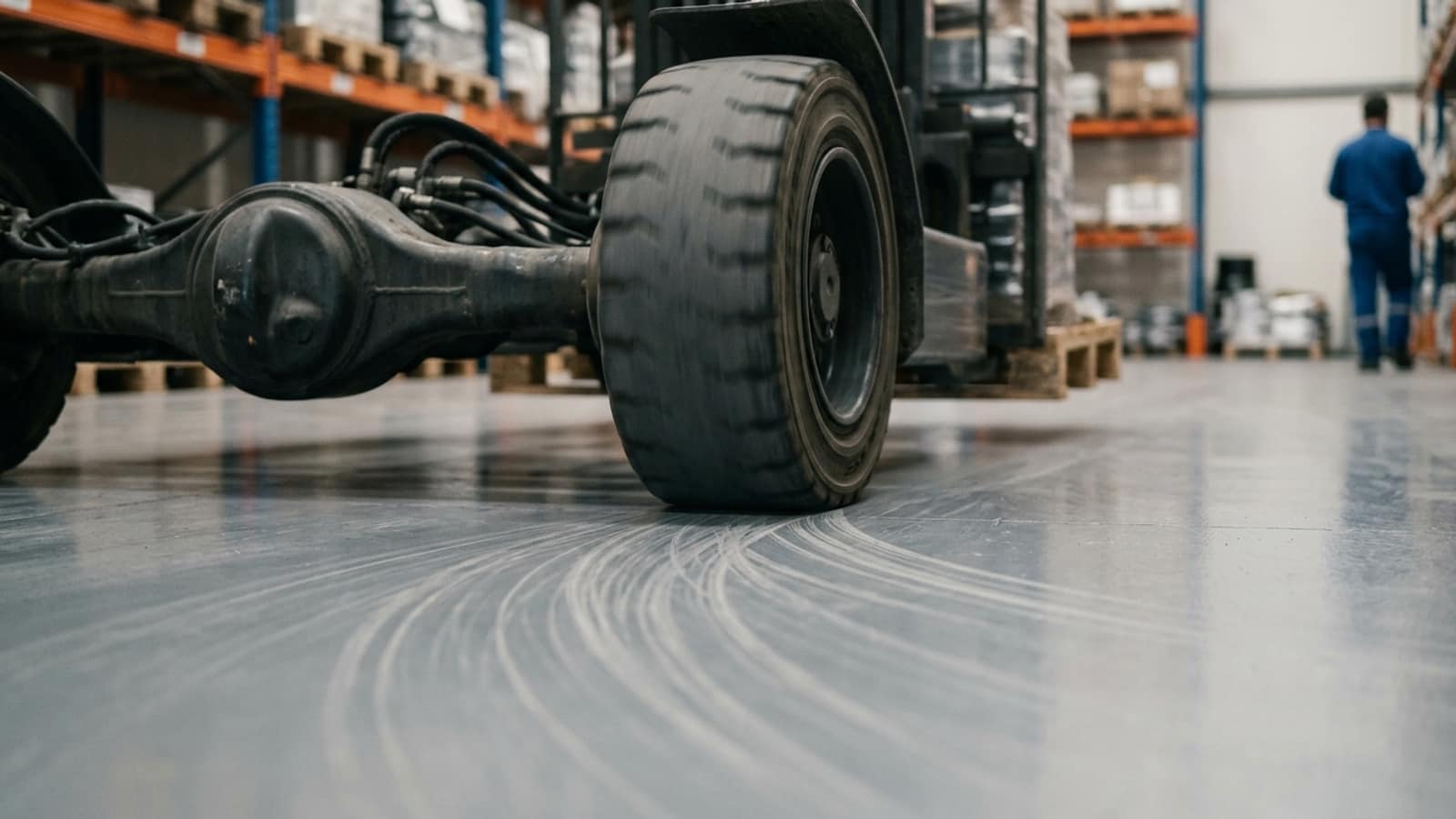
In a car park, failure always starts in the same places. These areas require separate solutions.
The work is not over when the car park floor is finished; the area also has to become legible. This is a matter of both safety and operational efficiency.
Car parks are usually coated while in use, which makes planning as important as the technical part of the work.
For a comparison of all floor systems see floor coating applications page.
Bring durability and good looks together with epoxy floor coating. Discover the self-levelling, antistatic and decorative epoxy solutions of Likit İzolasyon!
Service details →Bring chemical resistance, hygiene and good looks together with polyurethane floor coating. Discover the self-levelling, matt and antistatic coating solutions of Likit İzolasyon!
Service details →With car park line marking we bring order and safety to your areas. Create functional spaces with the durable and attractive car park solutions of Likit İzolasyon!
Service details →With wall and column painting and numbering we bring order, durability and good looks to your spaces. Create functional spaces with the professional solutions of Likit İzolasyon!
Service details →Applied with the right system and the right thickness, it serves for many years. The main factors determining its life are surface preparation, thickness and dealing separately with critical areas such as ramps. Ramps and turning points are usually renewed first; flat areas last far longer.
Yes, the area is worked in phases. While one section is closed and being coated, the other stays in service. This requires planning for temporary wayfinding, ventilation and curing times.
If there is occupied space beneath, the coating must also act as waterproofing. In that case layered systems comprising an elastic waterproofing layer with a wearing layer above it are used. A wearing coating alone is not sufficient.
Yes; once oil has soaked into concrete it directly prevents the coating from bonding. These areas are treated with special cleaners and, if necessary, the surface is removed mechanically. A coating over an uncleaned oil stain lifts within a short time.
Friction is increased by broadcasting aggregate onto the surface or forming a non-slip texture. The slip class is determined taking the gradient of the ramp and how wet it gets into account. The ramp is the area of a car park that requires the highest slip resistance.
After the curing time of the coating is complete. Line paint applied too early neither bonds properly nor allows the layer beneath to cure correctly. Line paint should also be chosen from a resin family compatible with the floor system.
With over 25 years of field experience, let us determine the right solution for your building together. Contact us for a survey and quotation.
Over 25 years of field experience in waterproofing, floor coatings and structural strengthening. This article is based on applications encountered on site and the standards currently in force.