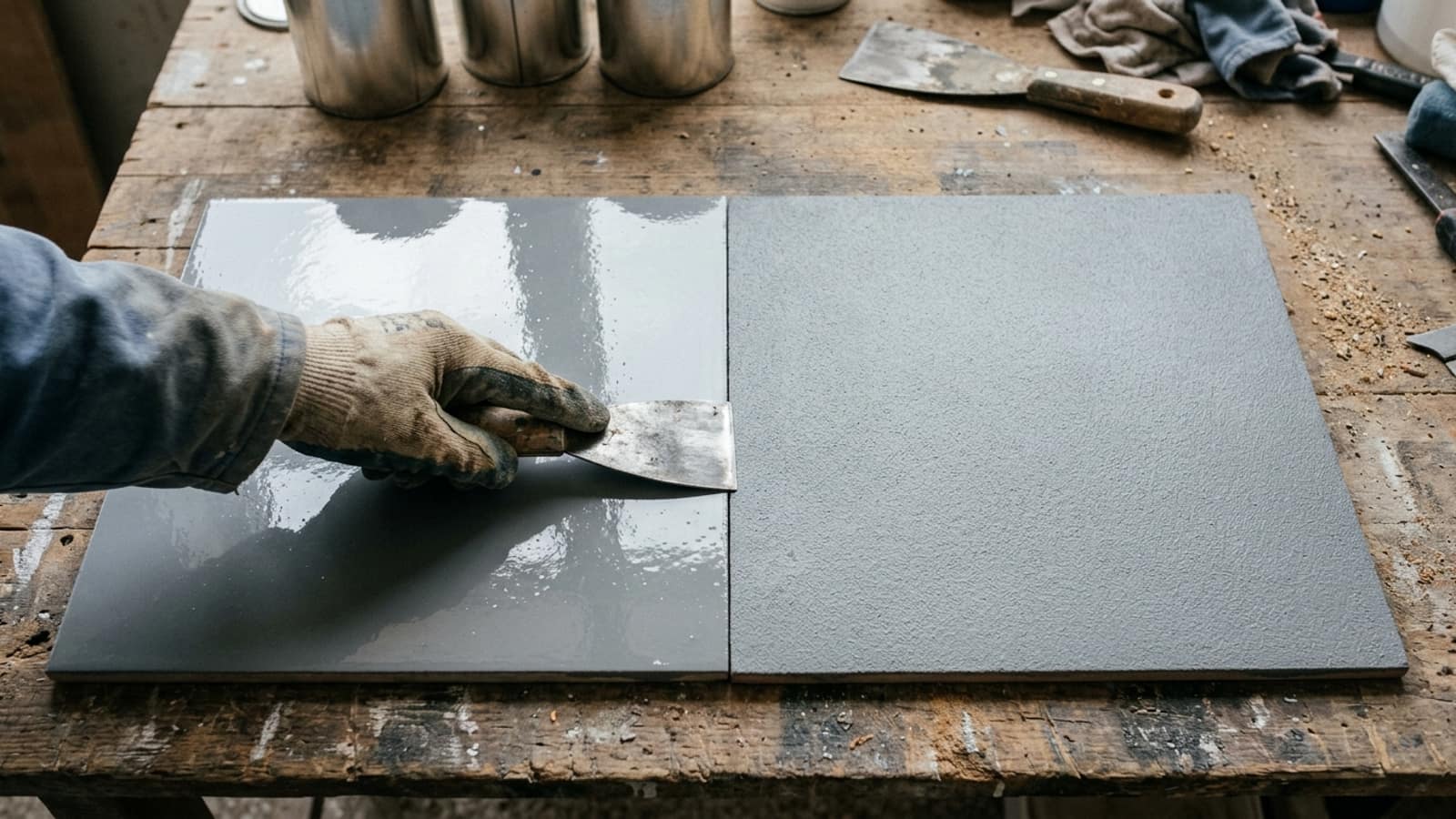
The real cost of floor coating is not the price of the application but the facility's downtime. The right system is the one that is applied once and forgotten for years.

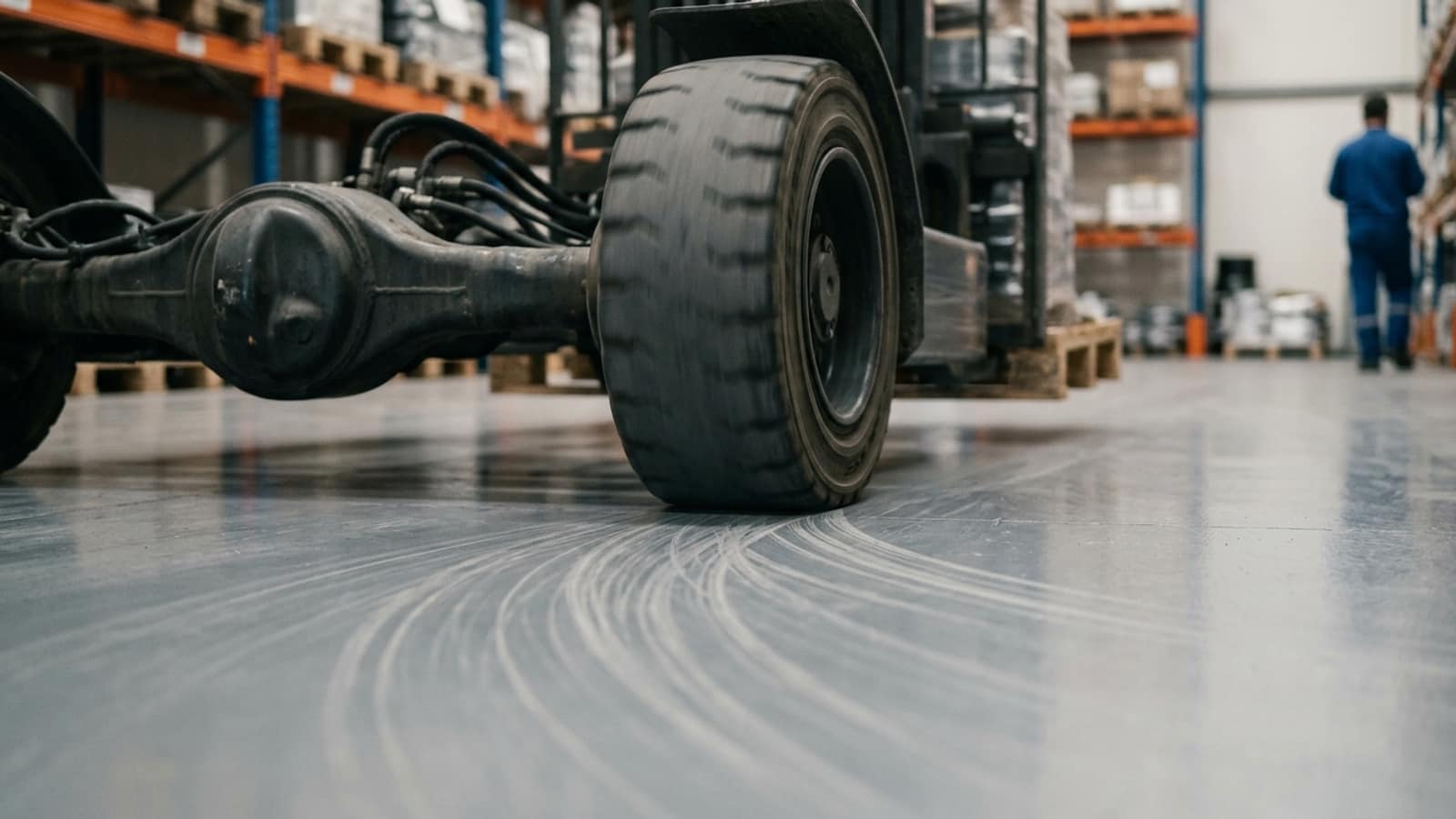
In an industrial facility the floor is not a surface people walk on; it is a working production component. It carries forklift traffic, resists chemical spills, has to be cleanable, and when it dusts, that dust ends up in the product being made. For this reason the floor coating decision is not an aesthetic one but an operational one.
In this article we look at why bare concrete falls short, which concrete problems a coating solves, the differences between the system options, and how the investment pays for itself on the cost side.

The real cost of floor coating is not the price of the application but the facility's downtime. The right system is the one that is applied once and forgotten for years.
Ahmet Toka, General Manager
Concrete is a material with high compressive strength but a weak surface. In industrial use that weakness soon shows itself.
A floor coating answers each of the problems above directly.
There is no single system for industrial floors; load, chemical and temperature conditions determine the choice.
Used in areas with light and medium loads where a smooth, attractive surface is wanted. Self-levelling epoxy gives a smooth, seamless surface; this group covers the majority of areas such as warehouses, assembly lines and car parks. Details: epoxy floor coatings.
These are aggregate-filled systems applied at thicknesses from a few millimetres up to a centimetre. They are designed for areas with heavy impact, continuous forklift traffic and high abrasion. Thickness is the direct source of mechanical strength.
The standard solution for food, beverage and pharmaceutical production. It withstands hot-water washing, steam cleaning and thermal shock; because it behaves like concrete under expansion, the risk of lifting is low. Details: polyurethane concrete coating.
Antistatic systems that control static charge in electronics manufacturing, special vinyl ester coatings for heavy chemical exposure, and, in facilities that need to be back in service quickly, polyurea floor coatings fall into this group.
Floor coating quotations are usually compared on a price-per-square-metre basis. Yet for the facility owner there are three items that really matter.
On top of this, costs that cannot be priced directly but are nonetheless real — such as the risk of an accident or of failing a hygiene inspection — also enter the picture. For a comprehensive assessment see floor coating applications page.
Protect your structures against external factors with floor coating applications from Likit İzolasyon. Discover our solutions offering hygiene, durability and aesthetics!
Service details →Bring durability and good looks together with epoxy floor coating. Discover the self-levelling, antistatic and decorative epoxy solutions of Likit İzolasyon!
Service details →Achieve hygienic, long-lasting floor solutions with high chemical and mechanical resistance using polyurethane concrete flooring. Discover the dependable services of Likit İzolasyon!
Service details →Achieve durable and attractive concrete floors with floor polishing and dust-proofing applications. Give your buildings a long life with the professional solutions of Likit İzolasyon!
Service details →Including surface preparation, a medium-sized area is generally completed in one week to ten days. What determines this is not the application itself but the waiting and curing times between layers. With fast systems this can be reduced to a few days.
The area can be divided and worked in stages, so one part of the facility operates while another is coated. This requires planning for the separation of dust, odour and traffic. Completely uninterrupted application is not possible, but downtime can be kept to a minimum.
If the existing coating is sound and its adhesion has been measured, a new coating can be applied over it with a suitable primer. If there is blistering, delamination or widespread cracking, the old layer must be removed mechanically; otherwise the new coating will lift along with it.
Flat, glossy surfaces can be slippery when wet. For this reason aggregate is added to the surface in wet areas to achieve the required slip class. Slip resistance is a safety parameter that comes before aesthetics in the choice of coating.
Moisture within the concrete creates vapour pressure beneath the coating and causes blistering. If the measurement is above the limit, either the concrete is left to dry or special primer systems acting as a moisture barrier are used. Moisture measurement must not be skipped.
Regular cleaning, use of detergent at a suitable pH and early detection of worn areas are sufficient. Checking the joints and high-traffic crossing points once a year extends the service life considerably through small repairs.
With over 25 years of field experience, let us determine the right solution for your building together. Contact us for a survey and quotation.
Over 25 years of field experience in waterproofing, floor coatings and structural strengthening. This article is based on applications encountered on site and the standards currently in force.