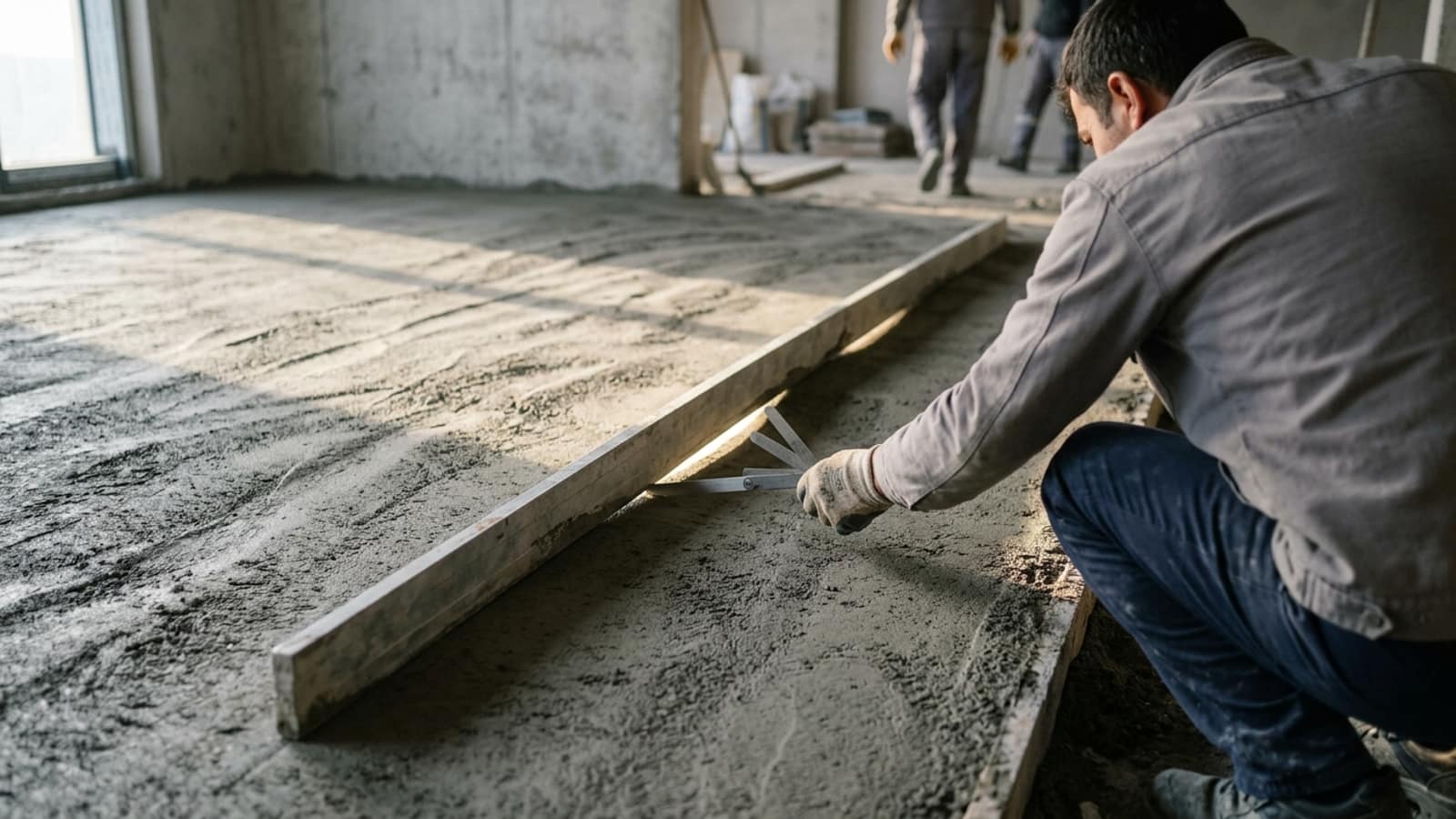
With sports flooring, the substrate is discussed before the surface. On a base that has not been properly prepared, even the best system cracks within a few seasons.

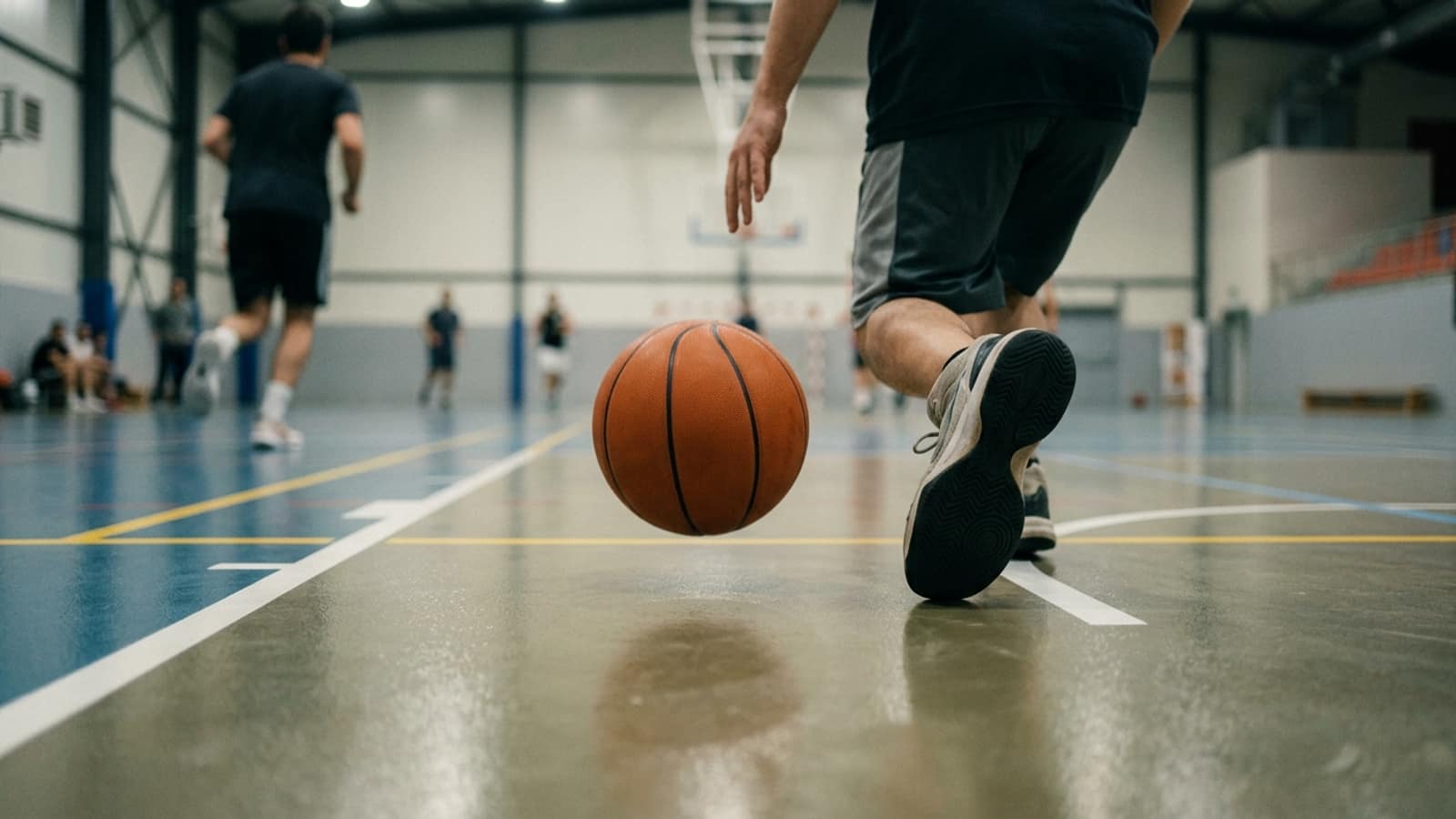
In sports flooring, what counts as a "good surface" changes with the discipline. On a basketball court it is critical that the ball bounces to the same height, whereas on a running track what matters is energy return and joint protection. On a tennis court the speed of play is set directly by the surface texture.
In this article we look at sports floor systems through the requirements of each discipline: which system is right for which sport, what to watch for outdoors, how the substrate is prepared and why line marking demands its own expertise.

With sports flooring, the substrate is discussed before the surface. On a base that has not been properly prepared, even the best system cracks within a few seasons.
Ahmet Toka, General Manager
Sports floors are assessed by different criteria from industrial floors. The decisive properties are as follows:
There are three groups in widespread use on site; each strikes a different balance.
These are systems containing water-based acrylic resin and silica filler, applied in thin layers over concrete or asphalt. Their UV resistance outdoors is good, the colour range is wide, and the surface texture — and therefore the speed of play — can be adjusted through the composition of the layers.
It is the most widespread solution for outdoor tennis courts and basketball and volleyball courts. Maintenance is simple and the cost of renewal is low: years later, the court can be refreshed by reapplying the surface layers. Details: acrylic floor coatings.
These consist of an elastic intermediate layer and a wearing layer applied over it. Their shock absorption is higher than that of acrylic systems, which is why they are preferred for running tracks, multi-purpose halls and school sports areas.
The thickness of the elastic layer is determined by the required shock absorption class. Because it is seamless it is easy to clean, and with a suitable top coat it provides UV resistance outdoors. General information: sports floor coatings.
PVC synthetic floors supplied in rolls or tiles allow rapid installation in indoor halls. Timber sprung floors are the classic solution for professional basketball and handball halls; they give the best ball bounce and playing feel but require moisture control and maintenance.
The common requirement of these systems is that the floor beneath them must be very flat. To provide that level plane, self-levelling screed is usually applied.
| Discipline / area | Preferred system | Why |
|---|---|---|
| Tennis court (outdoor) | Acrylic | Adjustable speed of play, UV resistance |
| Basketball (outdoor) | Acrylic | Consistent ball bounce, low maintenance |
| Basketball (indoor, professional) | Timber sprung floor | The best bounce and playing feel |
| Multi-purpose hall | Polyurethane or PVC | Suits different disciplines, shock absorption |
| Running track | Polyurethane | Energy return, joint protection |
| School playground | Acrylic | Durability, economy, colour |
| Fitness / weights area | Rubber tiles | Impact absorption, equipment protection |
| Five-a-side pitch | Artificial turf | Discipline-specific infill and fibre |
Most sports floor failures originate not in the surface but in the layer beneath it. Correct preparation includes the following steps:
Court lines are not an accessory to the surface; they are part of the rules of the game. The dimensions must comply with those set by the governing bodies of each discipline, and on multi-purpose courts the lines of different disciplines are planned together with a colour separation.
The paint used must be compatible with the floor system: acrylic-based line paint is used on an acrylic surface and polyurethane-based line paint on a polyurethane surface. Incompatible paint blisters over time or softens the layer beneath it. Masking for sharp edges and observing the curing times are critical. For details of this work: sports court lines.
What should be checked before handover: that the line dimensions comply with the governing body's standard, that there is no ponding water on the surface, that the edge terminations of the coating are sound and that the full curing time has been completed. For a general assessment of the systems see floor coating applications page.
With sports flooring we offer durable floor solutions that support athlete health and performance. Get to know the professional coating services of Likit İzolasyon!
Service details →Bring durable, attractive and economical solutions to sports courts with acrylic floor coating. Get service to professional standards with Likit İzolasyon's wide range of colours!
Service details →Make your playing areas orderly and compliant with the rules through sports pitch line marking. Achieve durable, attractive results with the professional pitch marking solutions of Likit İzolasyon!
Service details →Eliminate irregularities in your floor and achieve a smooth surface with self-levelling screed applications. Discover Likit İzolasyon's self-levelling solutions!
Service details →It depends on intensity of use and on the climate. When the surface layers wear, the court can be refreshed by reapplying the top layers without touching the layers beneath. This renewal is considerably more economical than the original application and extends the life of the court.
Yes, acrylic systems are widely applied over asphalt. The asphalt must be sufficiently settled and its surface flat and free of oil residue. A waiting period is required for new asphalt; applying too early can cause staining and adhesion problems at the surface.
For professional basketball and handball, a timber sprung floor gives the best playing feel. If multi-discipline use, low maintenance and greater budget flexibility are wanted, polyurethane or PVC synthetic systems are more suitable. The decision is made according to how many disciplines the court will serve.
No. Ponding is a problem of falls and is not solved with a coating. The fall of the surface must be corrected first, and a levelling layer applied if necessary. On a court where water ponds, the surface both deteriorates rapidly and reduces playing safety.
The most common causes are the use of paint incompatible with the floor system, insufficient cleaning of the surface before application, and opening the court to use before the curing time has elapsed. Line paint should be chosen from the same resin family as the surface.
If the substrate is ready, a standard outdoor court is generally completed within one to two weeks. The main factor determining the time is the drying periods between layers; work stops in wet weather. If the substrate needs repair, the time extends accordingly.
With over 25 years of field experience, let us determine the right solution for your building together. Contact us for a survey and quotation.
Over 25 years of field experience in waterproofing, floor coatings and structural strengthening. This article is based on applications encountered on site and the standards currently in force.