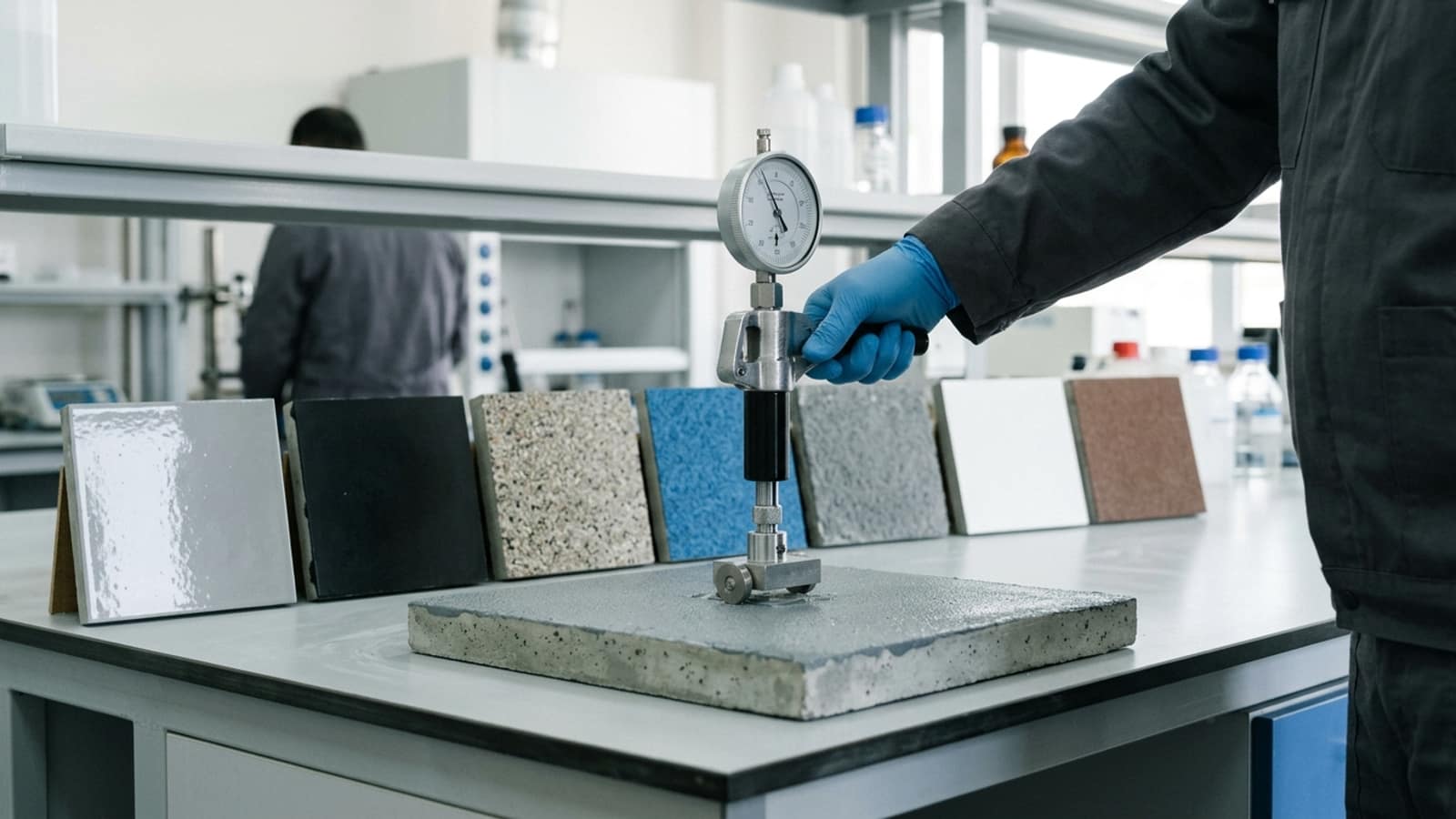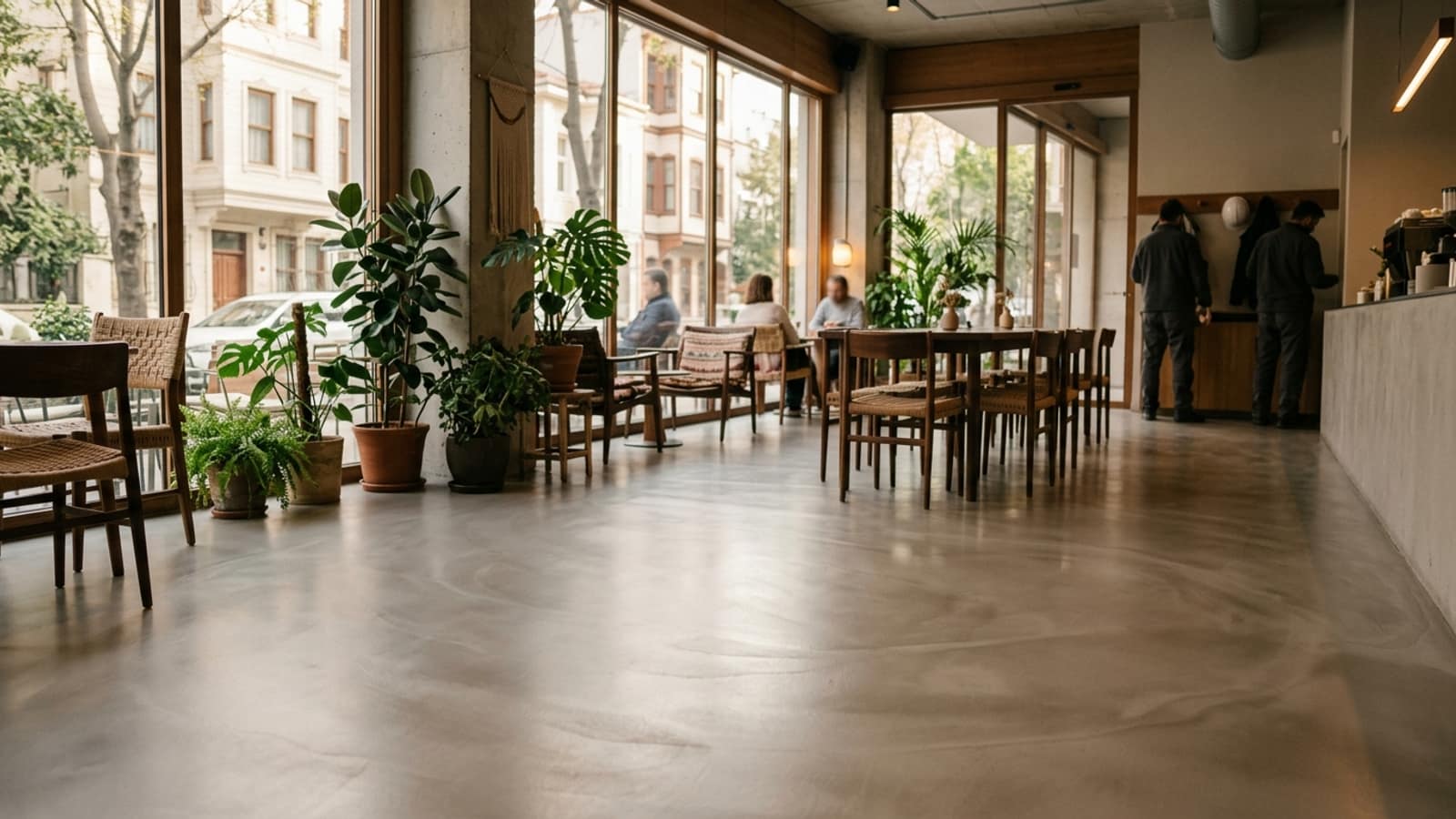
The most environmentally friendly state of a material is the state in which you do not have to replace it. Long service life is the strongest sustainability criterion.

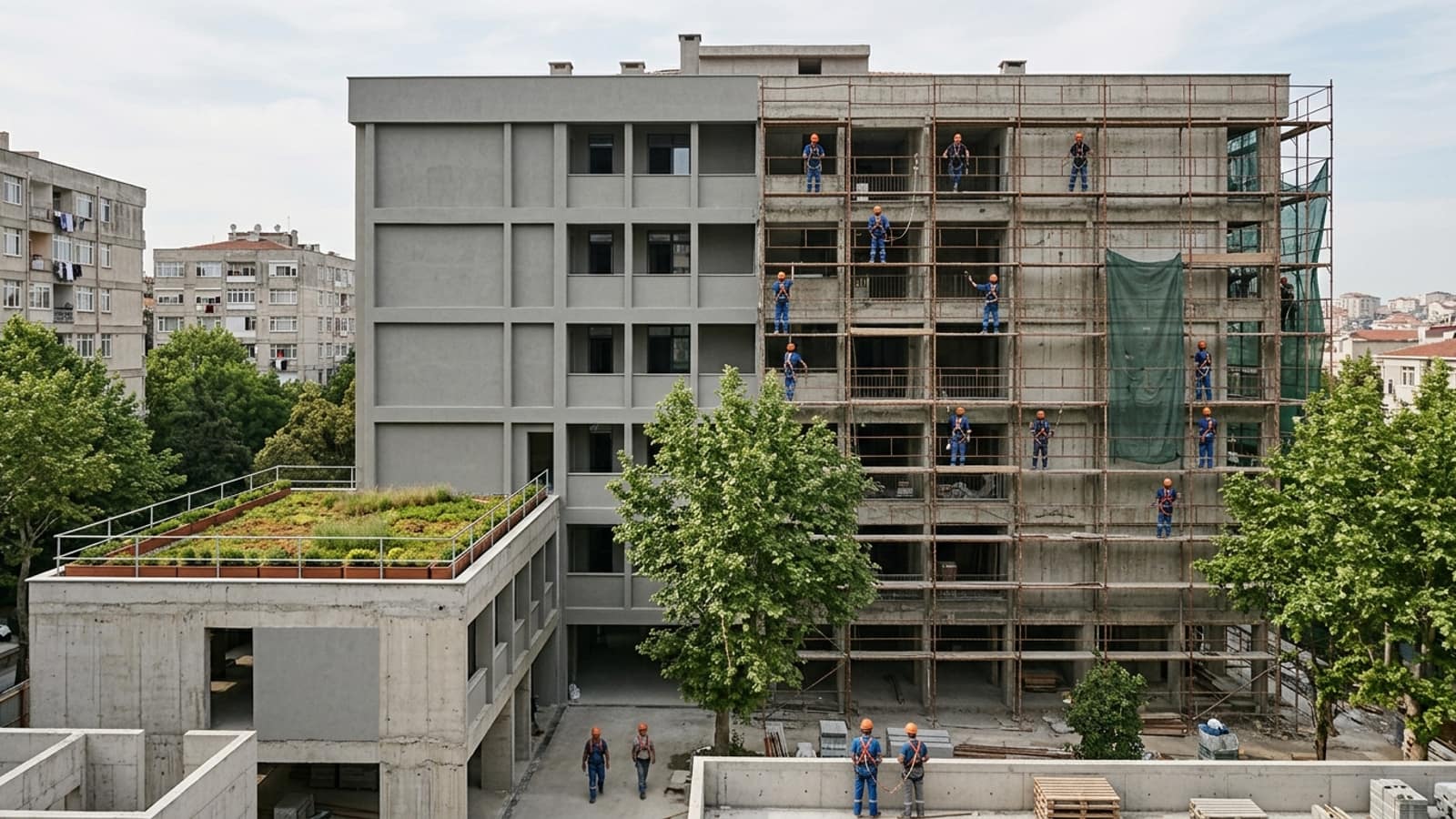
In the construction sector, environmental impact usually brings the material itself to mind. Yet the largest single item in a building's environmental balance sheet is usually this: work that is renewed early, stripped out and sent to landfillThe total impact of a coating renewed every five years is significantly higher than that of a coating lasting twice as long.
In this article we address the practical ways of reducing environmental impact: what to look at when choosing products, repairing while preserving the existing structure, reducing stripping out and debris, and the gains during the building's operational life.

The most environmentally friendly state of a material is the state in which you do not have to replace it. Long service life is the strongest sustainability criterion.
Ahmet Toka, General Manager
Stripping out a building element produces far more impact than putting a new one in its place: the labour of removal, hauling debris, landfill and the production of new material. That entire chain can usually be avoided by repair.
What these approaches have in common is that they preserve the material and energy embodied in the existing structure. In the sustainability debate, this is usually where the most tangible gain lies.
The environmental performance of a product should be measured not by its impact at the production stage but by that impact divided by the number of years it serves. This view changes the choice of material.
For example, in a food plant washed with hot water, while a standard epoxy coating is renewed every few years, a correctly chosen polyurethane concrete system serves for far longer. The option with the higher unit cost can have lower impact both economically and environmentally.
The same logic applies to waterproofing. A membrane left exposed to the sun without a protection layer ages early and has to be renewed. The protection layer is a small item in the initial investment but it extends the life of the system significantly. For an overview see waterproofing page.
Some applications not only reduce their own impact; they also lower the building's consumption during its operational life.
Environmental claims mean nothing unless they are verifiable. When assessing the environmental credentials of a product or an application, asking these three questions is enough:
These three questions are a practical filter for separating marketing language from technical information. The documentation for the products we use in our work is shared on every project; for details see contact page.
With micro concrete application we offer durable and attractive floor solutions. Choose Likit İzolasyon for modern, long-lasting floors from industrial facilities to commercial spaces!
Service details →Achieve durable and attractive concrete floors with floor polishing and dust-proofing applications. Give your buildings a long life with the professional solutions of Likit İzolasyon!
Service details →Provide long-lasting protection against wind, snow and rain on roof decks with PVC and TPO waterproofing applications. Reach waterproofing solutions that meet international standards with the expertise of Likit İzolasyon!
Service details →We give your structures durability and an attractive finish with concrete maintenance and repair. Protect your structures with Likit İzolasyon's solutions that prevent corrosion and deliver long service life!
Service details →In many applications, yes. Water-based formulations have developed markedly in recent years and give performance comparable to their solvent-based equivalents in many interior applications. However, in heavy chemical exposure and demanding external conditions, assessment on a product-by-product basis is still required.
Volatile organic compounds are released into the air during application and drying; they reduce indoor air quality and affect the health of the applicator. In enclosed spaces, schools, hospitals and homes, choosing a low-VOC product is a direct health decision.
Repair generally has lower impact because it preserves the material and energy embodied in the existing structure. But if the repair is going to be short-lived and repeated every few years, the equation changes. The decision should be made on the basis of expected service life.
No. Additional load-bearing capacity, a drainage arrangement and root-resistant waterproofing beneath are required. Work carried out without these conditions being met damages both the structure and the waterproofing. On existing buildings a structural assessment must be made first.
It gives a measurable reduction in surface temperature, which reduces the cooling load in summer. The size of the effect depends on the climate, the roof area and how the building is used. The clearest benefit is seen in industrial buildings with large roofs.
The unit price of documented products can be somewhat higher; but the difference is generally limited within the total project cost. In return, certification provides assurance both of compliance and in any disputes that may arise later.
With over 25 years of field experience, let us determine the right solution for your building together. Contact us for a survey and quotation.
Over 25 years of field experience in waterproofing, floor coatings and structural strengthening. This article is based on applications encountered on site and the standards currently in force.