A new material is not new if it does not give a better result on site than the old one. The criterion is not a laboratory value but the condition five years later.

Developments in construction chemicals generally proceed quietly. A material does not appear all at once; it is first tried on demanding projects, then its cost falls and finally it becomes the standard for ordinary work. Many solutions we regard as routine today were specialist applications ten years ago.
In this article we address developments that have actually come into use on site and have changed the way work is done: the integral waterproofing approach, fast-curing coatings, non-destructive investigation methods and the change in site record-keeping discipline.

A new material is not new if it does not give a better result on site than the old one. The criterion is not a laboratory value but the condition five years later.
Ahmet Toka, General Manager
In the classic approach, waterproofing is a layer laid over the concrete. If that layer is punctured, torn or opens at a lap, the system is out of action. The integral waterproofing approach, by contrast, aims to make the concrete itself impermeable.
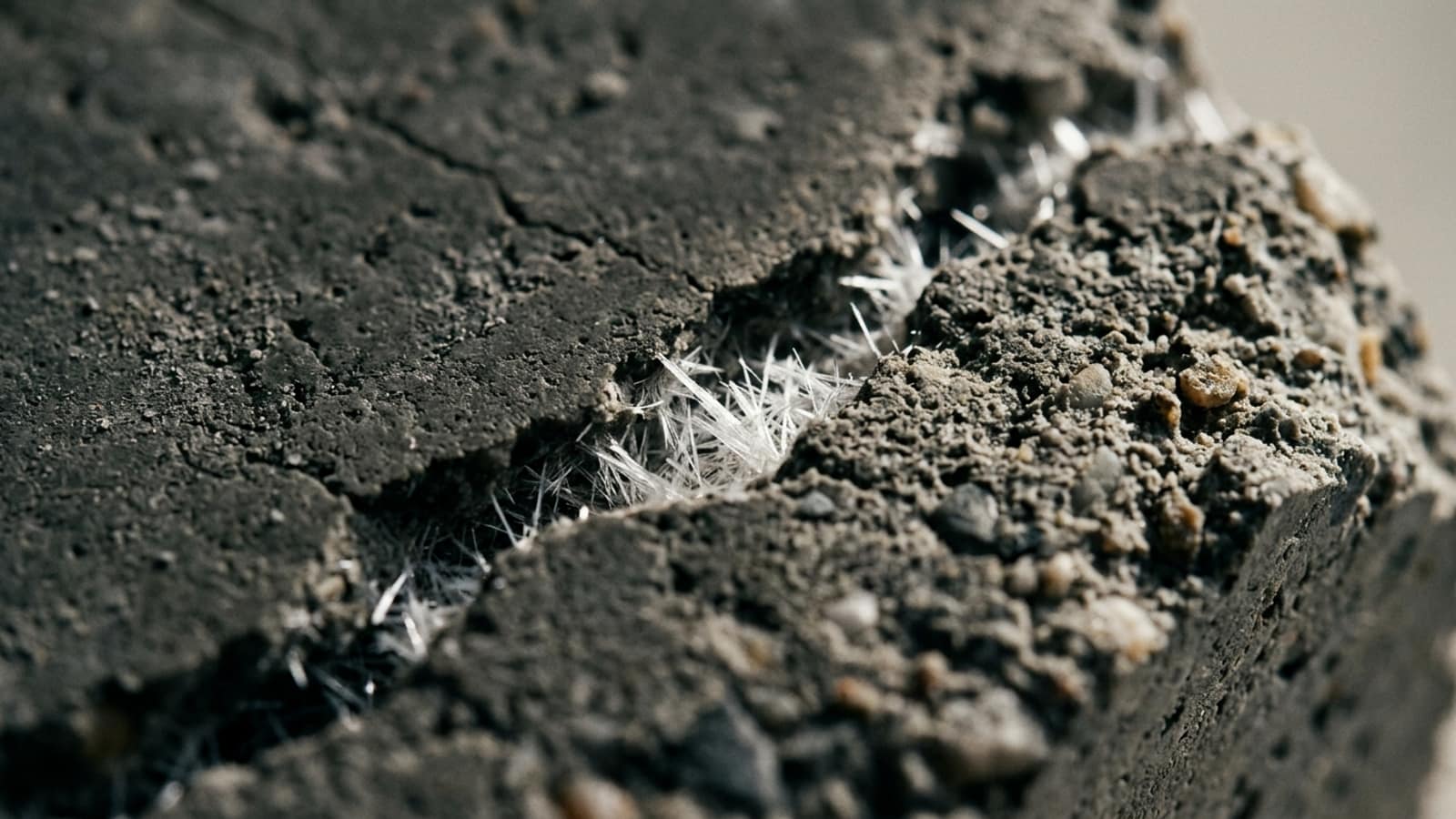
Crystalline admixtures are the most widespread example of this approach: they react with the lime and moisture within the concrete and fill the capillary voids with crystals. Because the waterproofing is in the cross-section rather than at the surface, the concepts of puncturing and tearing disappear; hairline cracks can also self-seal on contact with water.
The practical effect of this approach is a reduced need for a protection layer and a lighter burden on the programme. However, movement joints and wide cracks are not solved by this method; for that reason the common practice is to combine integral waterproofing with surface systems, as two-layer assurance.
On industrial projects the cost of materials is usually small beside the cost of the facility standing idle. That reality has increased interest in fast-curing systems.
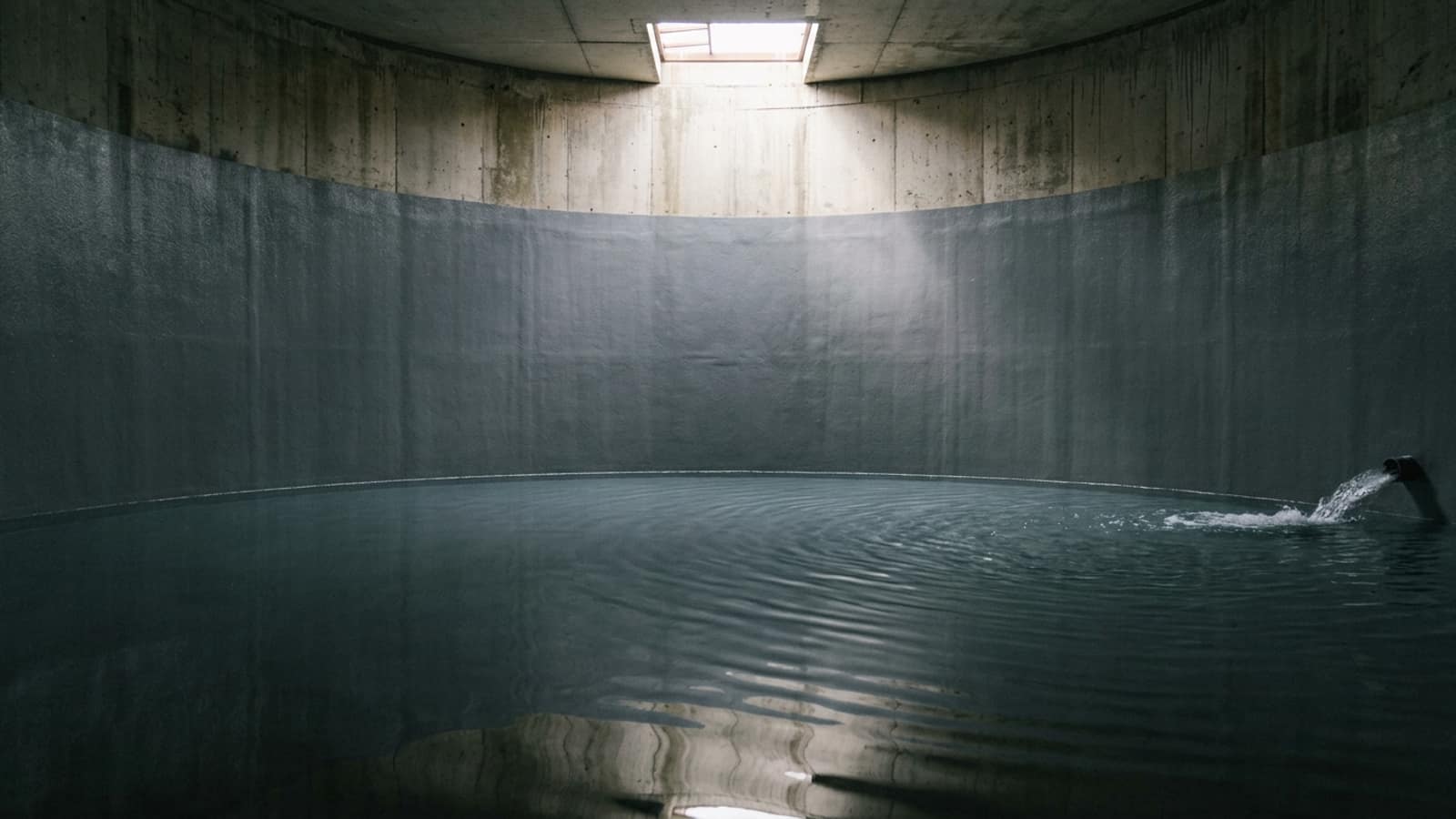
Polyurea is the clearest example of this group: it gels within seconds and can take load within hours. A water tank or production floor can be brought back into service within one shift, instead of a process that would take days with classic systems.
In the same way, polyurethane concrete systems eliminate the wait for concrete to dry, through their ability to be applied to damp, young concrete; on new-build projects this saves weeks.
The price of speed is the requirement for equipment and expertise. With these systems there is no opportunity to correct a mistake; the decision is fixed the moment the material reaches the surface. For that reason the advantage of speed only becomes a real advantage with a trained team.
One of the clearest changes on site has been at the diagnosis stage. It used to be necessary to break out in order to find the position of a leak; today, in many cases, it is not.
These methods produce strong clues rather than definitive proof. Correct use means assessing several methods together and only then carrying out limited breaking out. In practice this significantly reduces both the cost and the damage done to the structure.
The general trend in building repair is towards achieving the result with the smallest possible intervention. There are two reasons for this: the need to keep activity going in buildings that are in use, and the wish to save resources by preserving the existing structure.
Injection techniques are the most typical example of this trend: active water can be cut off without breaking out the wall, simply by drilling packer holes. In the same way, carbon fibre strengtheningprovides an increase in capacity without enlarging sections and without vacating the building.
On the flooring side, thin-layer systems such as micro concrete allow renewal without stripping out the existing finish. Eliminating the cost of removal and debris makes a meaningful difference both economically and environmentally.
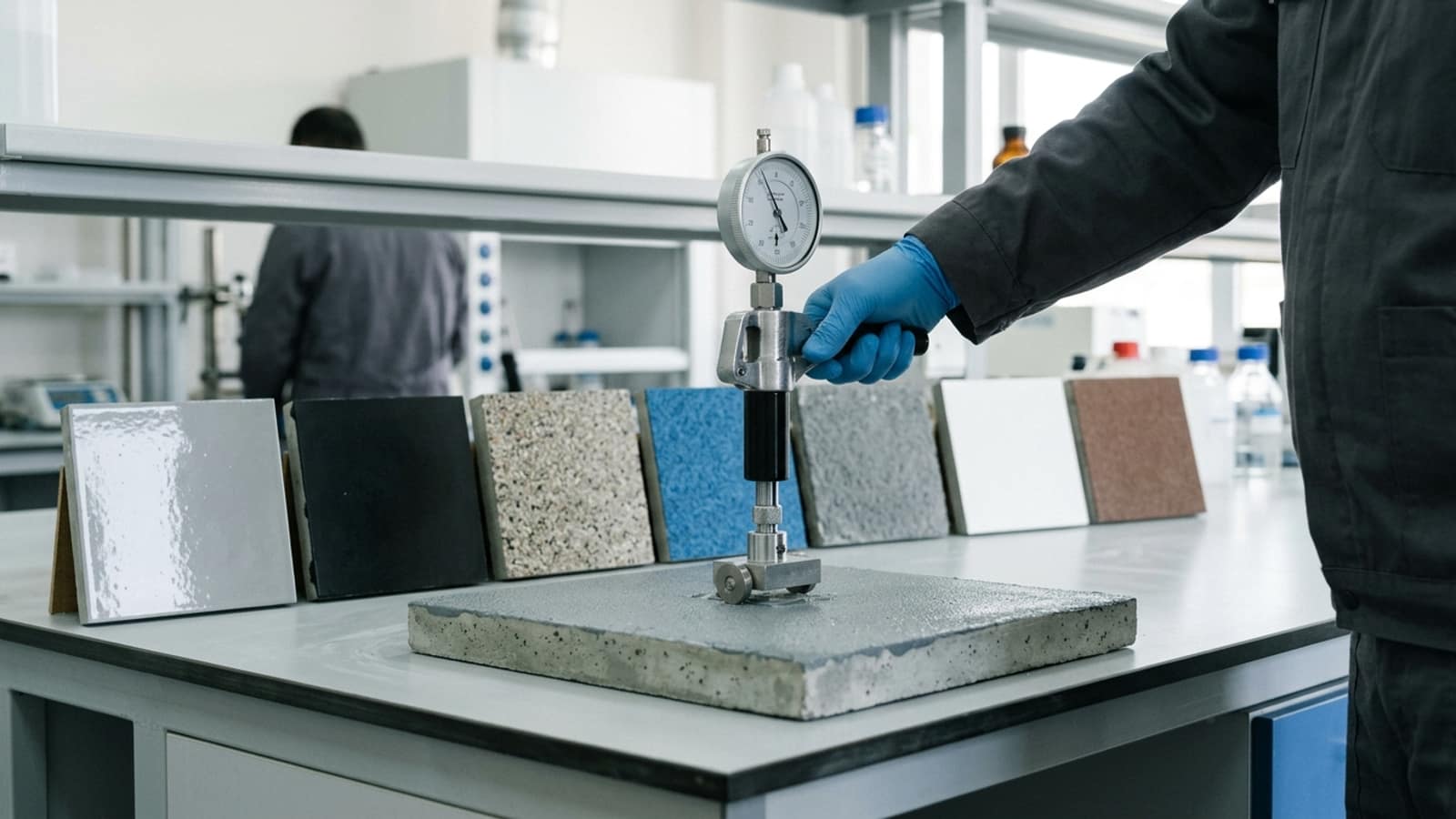
A change as important as materials is taking place on the documentation side. Items of work that used to be closed out with the statement "it was applied" are today handed over with measurable records.
These records may look like a bureaucratic burden, but they serve a practical function: when a problem arises, they make it possible to distinguish whether the cause lies in the material, in the workmanship or in the conditions. When that distinction cannot be made, the solution too rests on guesswork. For our approach to service see services page.
Crystalline concrete admixture penetrates the mass of the concrete to provide permanent waterproofing. It also works on the negative side in water tanks, basements, lift pits and pools. Applied with Likit İzolasyon expertise.
Service details →Achieve 100% waterproofing, seamless durability and attractive floor protection with pure polyurea coating. Get excellent results even on complex surfaces with Likit İzolasyon's innovative technologies!
Service details →Permanently stop water ingress through cracks with injection waterproofing. Trust Likit İzolasyon for effective solutions in basements, car park walls and terrace slabs!
Service details →Make your structures light and durable with carbon fibre polymer strengthening. Reinforce your structures with the modern strengthening solutions of Likit İzolasyon!
Service details →No. A new system offers an advantage for a particular condition; where that condition does not exist, neither does the advantage. For example, a fast-curing coating is simply a more expensive option on a project where downtime is not costly. The right question is not "is it new?" but "is it right for this job?".
In many structures it provides integral impermeability; but it cannot resolve movement joints and wide cracks. On critical structures the two systems are used together, as back-up for one another. The decision to use it on its own depends on the joint and crack behaviour of the structure.
It does not show it exactly; it distinguishes damp areas. The result is affected by the surface material, the effect of the sun and the difference between inside and outside temperatures. For that reason it should be assessed together with methods such as moisture measurement and a water retention test.
Technically it can be applied to many surfaces; but the requirement for equipment and expertise raises the cost on small areas. It is advantageous on projects where speed and abrasion resistance are critical. On an ordinary terrace application, polyurethane systems remain more economical.
When a problem arises, only these records show whether the cause lies in the material, in the workmanship or in the ambient conditions. Moreover, on a job where records are kept, application discipline is higher; what is measured is managed.
Largely yes. Existing buildings are in fact the field where non-destructive investigation methods are used most. On the repair side, injection, carbon fibre and thin-layer floor systems have been developed particularly for buildings that remain in use.
With over 25 years of field experience, let us determine the right solution for your building together. Contact us for a survey and quotation.
Over 25 years of field experience in waterproofing, floor coatings and structural strengthening. This article is based on applications encountered on site and the standards currently in force.