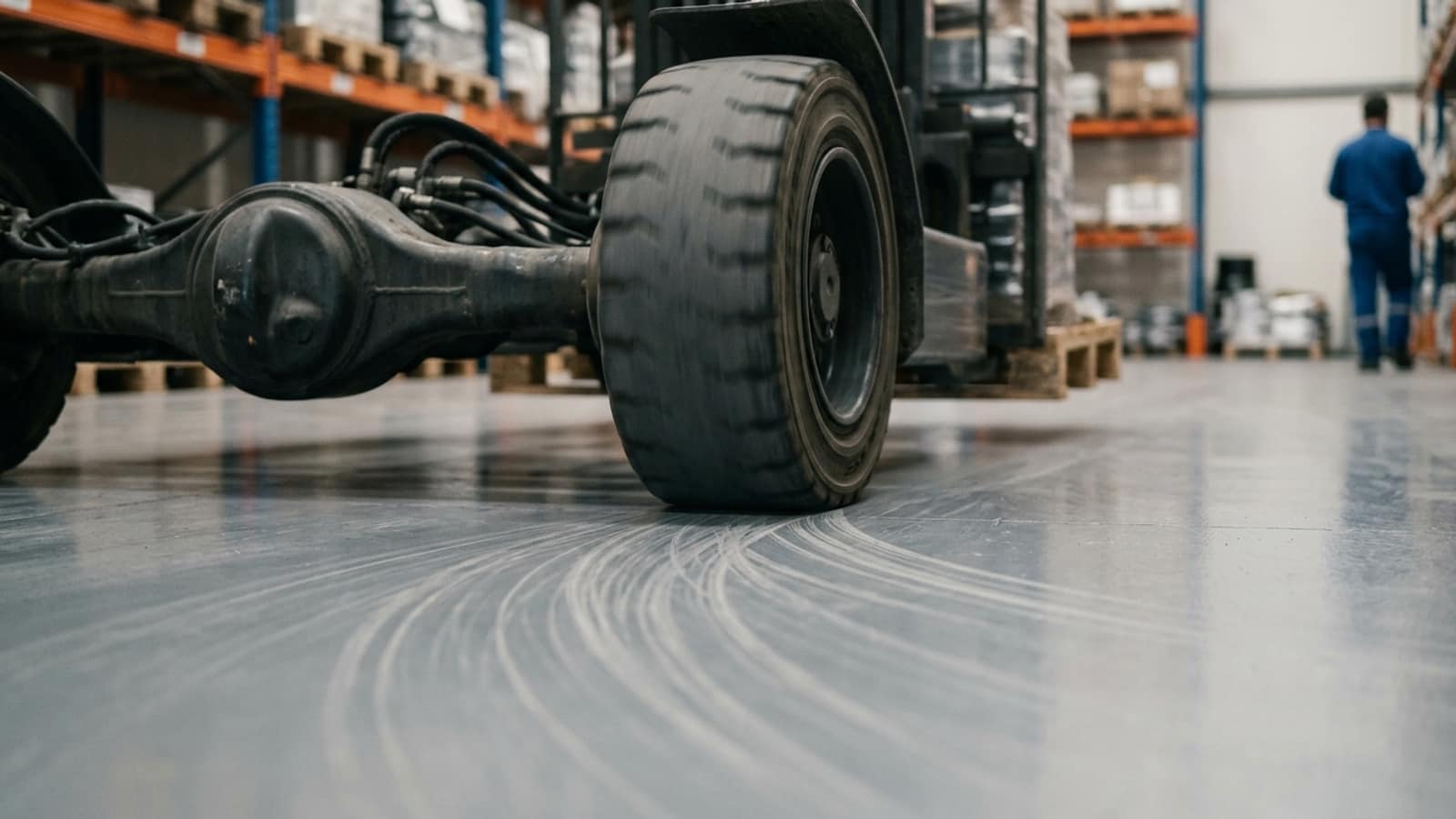
With a decorative floor the real question is not "which is prettier" but "which will withstand the use of this space". Appearance is discussed on day one; durability five years later.

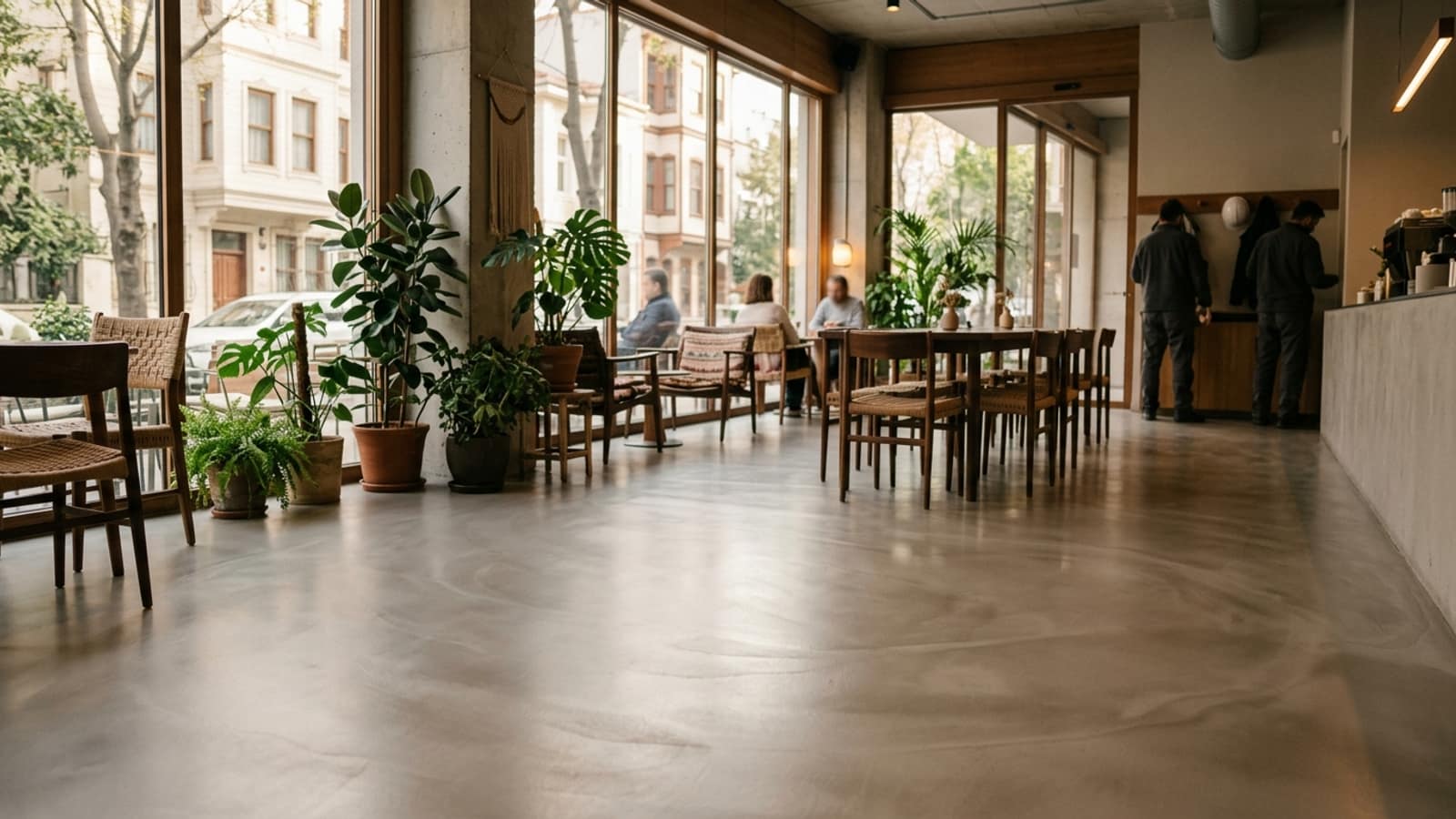
Decorative floor coatings were long seen purely as a question of appearance. Today that has changed: the same products are expected to deliver both aesthetics and technical performance. A café floor is required not only to look good but also to withstand hundreds of chair movements a day.
In this article we set the decorative floor options side by side: micro concrete, printed concrete, polished concrete, acrylic systems and decorative epoxy. We explain where each is strong and where it is weak, which is right for which space, and what questions to ask when making the choice.

With a decorative floor the real question is not "which is prettier" but "which will withstand the use of this space". Appearance is discussed on day one; durability five years later.
Ahmet Toka, General Manager
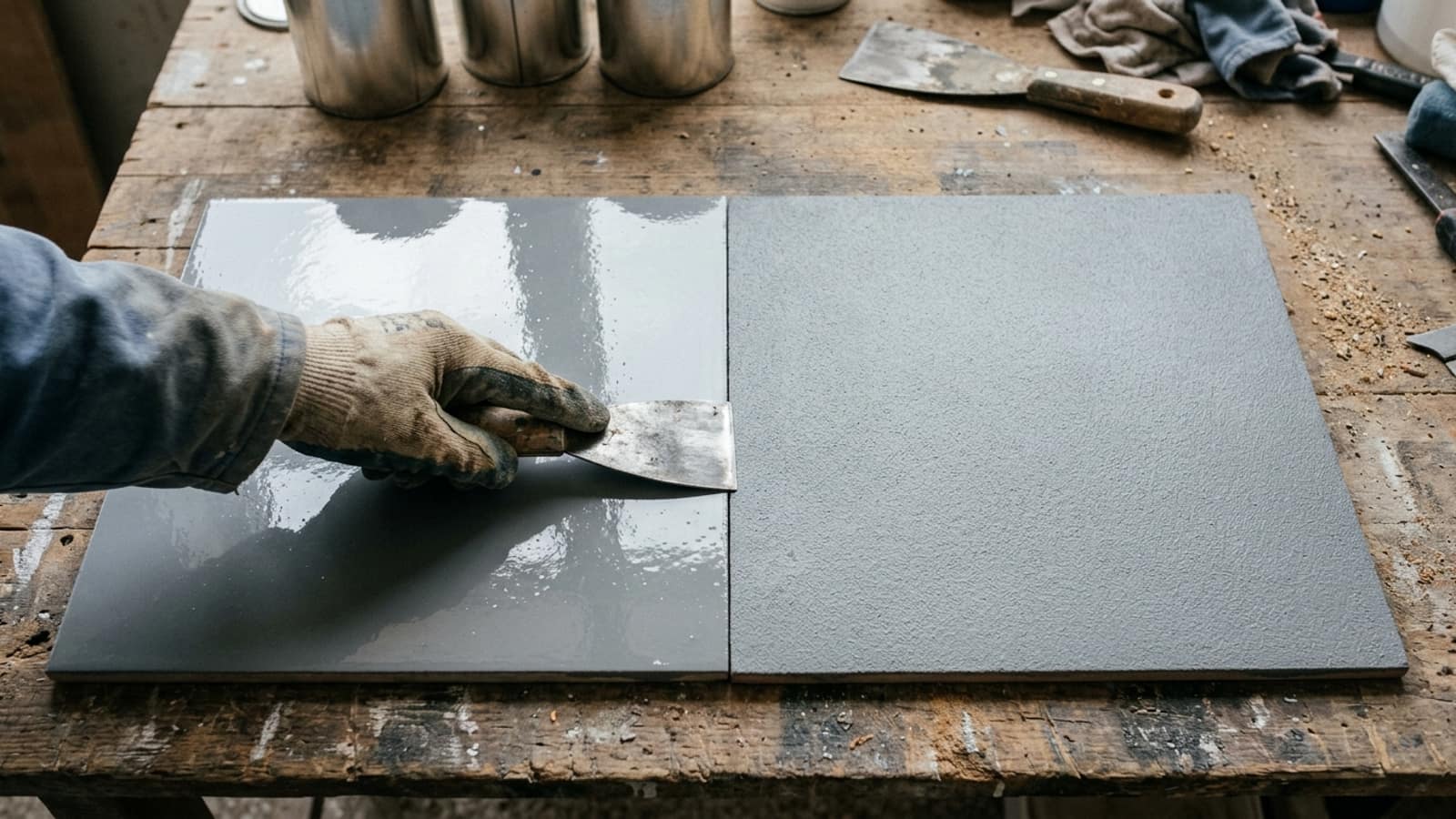
Micro concrete is a cement- and polymer-based coating applied in very thin layers of around 2–3 mm. Its greatest advantage is that it can be applied over an existing floor without removing it: old ceramic tiles, screed or a concrete surface can remain underneath with suitable preparation.
The result is a seamless, joint-free surface whose texture can be adjusted through hand craftsmanship. Because it can also be applied to walls, floor-and-wall continuity can be created; in small spaces this makes the perceived volume larger.
Where it is strong: Refurbishment projects, boutique shops, cafés, residential living areas, wet rooms. Points to watch: Because it is a thin layer, movement in the surface beneath is reflected directly; preparation and primer selection are critical. Details: micro concrete application.
Printed concrete is produced by broadcasting a colour hardener and release agent onto a fresh concrete surface and then stamping a pattern into it with moulds. The texture of natural stone, timber or brick comes together with the strength of monolithic concrete.
This is its greatest advantage outdoors: because it is joint-free, weeds do not grow through it, it does not settle and it carries vehicle loads as a single slab. Compared with block paving or natural stone, the maintenance burden is significantly lower.
Where it is strong: Gardens, footpaths, estate roads, car parks, pool surrounds, commercial outdoor areas. Points to watch: The surface sealer must be renewed periodically; otherwise the colour fades and the surface becomes absorbent. In freeze–thaw regions the concrete class and air entrainment must also be correctly chosen. Details: printed concrete application.
This approach does not add a new layer; it turns the existing concrete itself into the finish. The surface is ground with progressively finer diamond segments and densified by applying a chemical hardener (silicate-based) between passes.
The resulting surface does not dust, is highly resistant to abrasion and is one of the easiest options to maintain. Because no additional material thickness is involved, it creates no problems with levels. In spaces where an industrial look is preferred it is a strong option both aesthetically and technically.
Where it is strong: Showrooms, shops, warehouses, workshops, offices with an industrial look. Points to watch: The result depends directly on the quality of the existing concrete and the distribution of its aggregate; not every concrete is suitable for polishing. Details: floor polishing and dust-proofing.
Acrylic-based systems cure quickly, offer a wide colour range and have good UV resistance outdoors. They stand out on sports courts and in areas where multi-coloured patterns are wanted. Details: acrylic floor coatings.
Decorative epoxy and polyurethane systems, on the other hand, are applied with coloured flakes, quartz aggregate or metallic pigment. They combine the mechanical strength of resin systems with a decorative appearance. Metallic epoxy is a striking option for showrooms and commercial spaces; however, the appearance of the surface depends greatly on the applicator's skill and no two applications are identical.
This group is strong in commercial spaces where strength and appearance are wanted together. For comparison you may also look at epoxy floor coating our page.
| System | Thickness | Interior / Exterior | Its standout quality |
|---|---|---|---|
| Micro concrete | 2–3 mm | Interior (limited exterior) | Renewal without removal, seamless surface |
| Printed concrete | The concrete section | Exterior | Outdoor durability, variety of patterns |
| Polished concrete | No additional layer | Interior | Ease of maintenance, level unchanged |
| Acrylic | 1–3 mm | Exterior | Fast application, variety of colours |
| Decorative resin | 2–5 mm | Interior | Strength and appearance together |
Four questions are enough to clarify the choice: Is the space interior or exterior? Can the existing floor be removed? Is a rise in level acceptable? How heavy is the traffic? These four usually reduce the options to one or two. For an assessment of all the systems together see floor coating applications page.
With micro concrete application we offer durable and attractive floor solutions. Choose Likit İzolasyon for modern, long-lasting floors from industrial facilities to commercial spaces!
Service details →Bring the look of natural stone to your floors with stamped concrete applications. Choose Likit İzolasyon for attractive, durable and modern surfacing solutions!
Service details →Bring durable, attractive and economical solutions to sports courts with acrylic floor coating. Get service to professional standards with Likit İzolasyon's wide range of colours!
Service details →Achieve durable and attractive concrete floors with floor polishing and dust-proofing applications. Give your buildings a long life with the professional solutions of Likit İzolasyon!
Service details →Yes, this is one of its most common uses. The tiles must be sound and fully bonded to the surface, and loose tiles must be replaced. The surface is sanded, a suitable primer is applied and the joints are filled to prepare a level plane. This removes the cost of removal and debris.
The protective sealer on the surface is renewed at periodic intervals depending on intensity of use and on the climate. When the sealer is renewed, the vividness of the colour returns and the surface becomes water-repellent again. Printed concrete that is not maintained fades and becomes absorbent and therefore soiled.
No. The result depends on the strength of the existing concrete, the distribution of its aggregate and the flatness of the surface. On weak concrete, or concrete with numerous repairs, polishing will not give the appearance wanted. Opening a small trial area before the work is the safest course.
It varies by system. Polished concrete and decorative resins carry heavy commercial traffic; micro concrete, being a thin layer, is not preferred under heavy mechanical loads. Durability cannot be discussed until the actual traffic in the space has been established.
With micro concrete and acrylic systems the increase is a few millimetres and generally causes no problem at door undersides and thresholds. With resin mortar systems the increase is greater and door swings must be checked in advance. With polished concrete the level does not change at all.
They can, but waterproofing must be installed beneath them. A decorative coating is not a waterproofing layer. In wet areas the slip resistance of the surface must also be brought to the appropriate class.
With over 25 years of field experience, let us determine the right solution for your building together. Contact us for a survey and quotation.
Over 25 years of field experience in waterproofing, floor coatings and structural strengthening. This article is based on applications encountered on site and the standards currently in force.