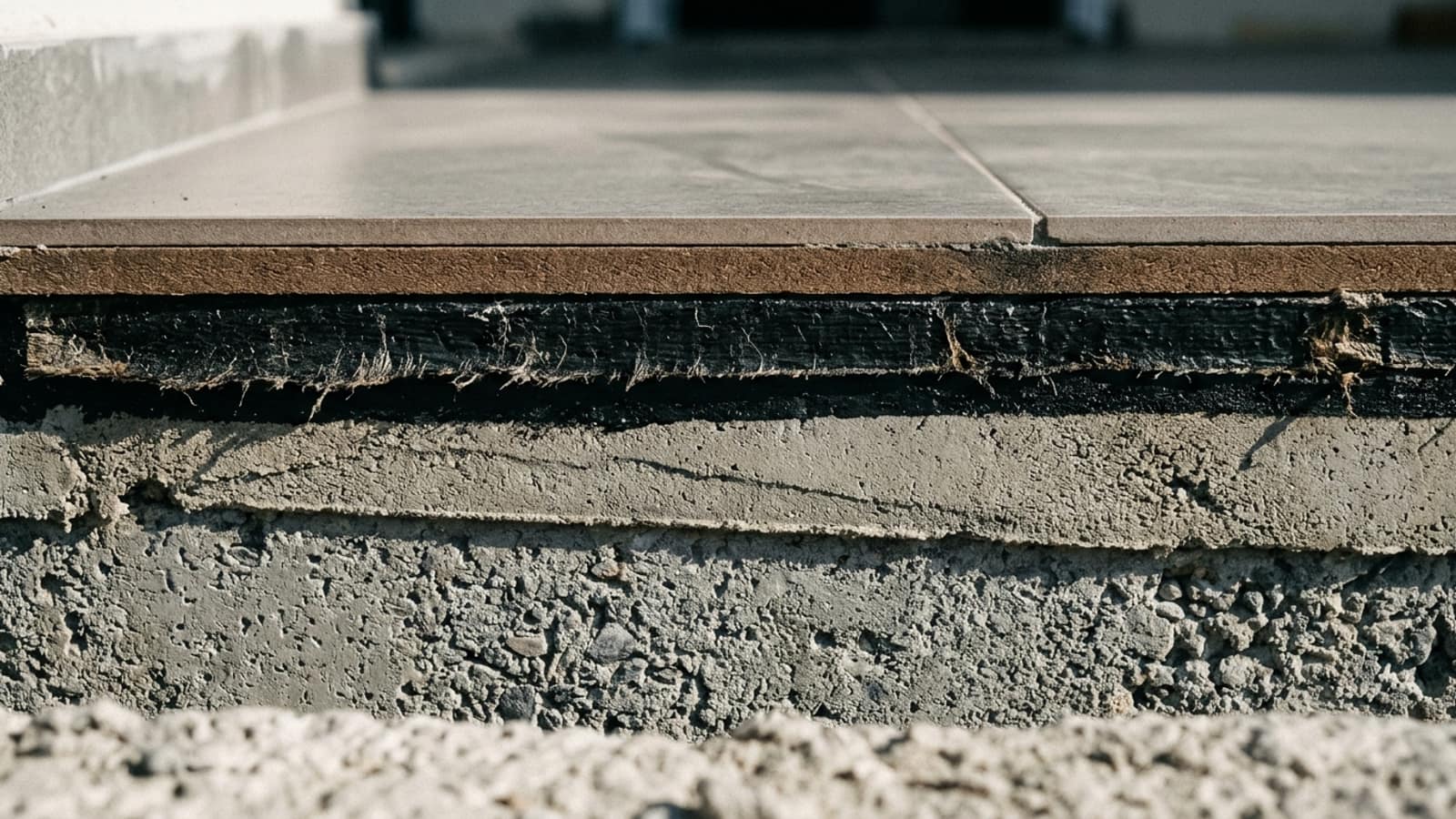
The material decision is not made according to the highest figures in the catalogue but according to what that surface actually experiences. There is no point paying for UV resistance on a foundation that never sees the sun.

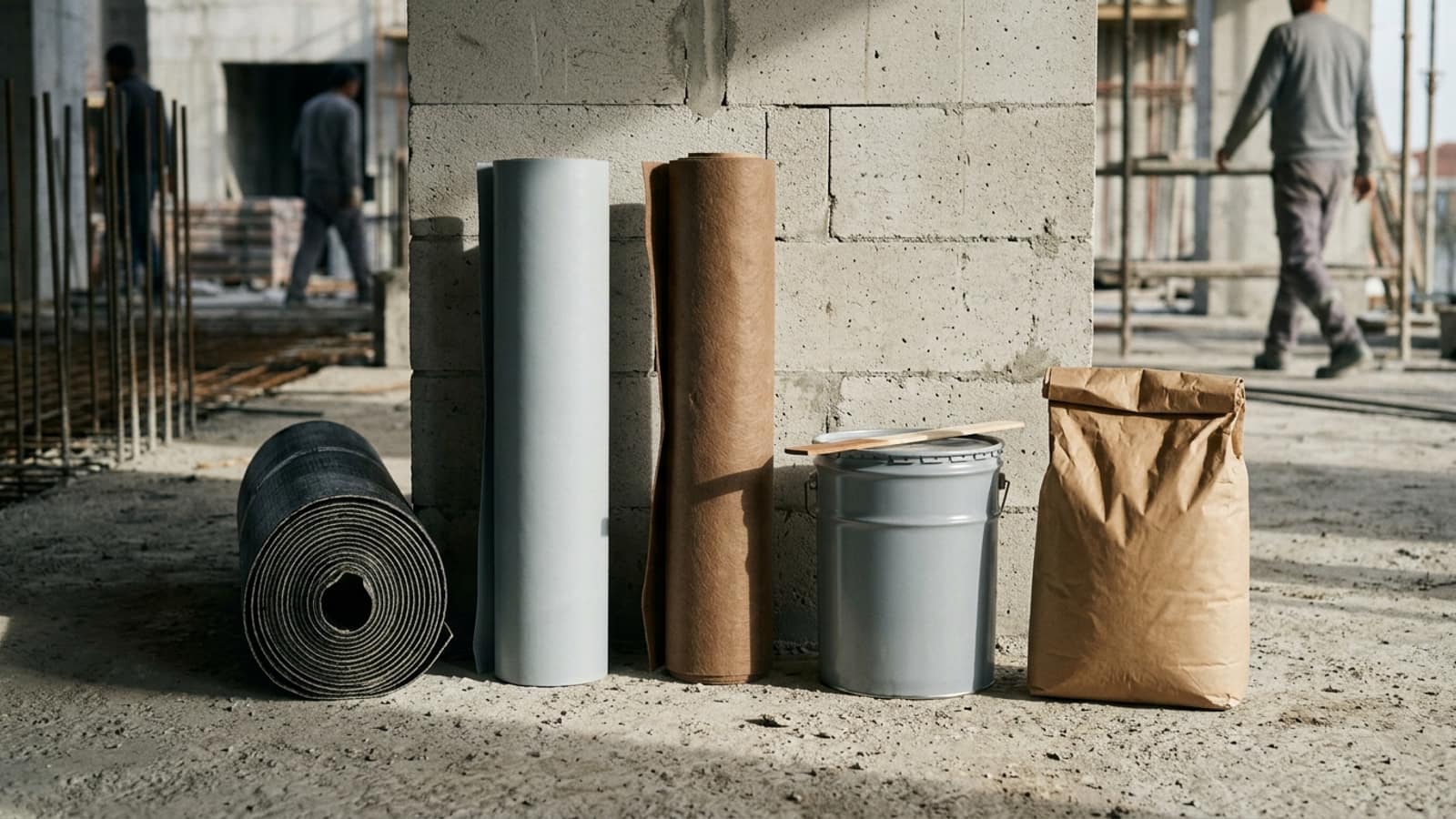
There is no single answer to "which waterproofing material is best?". The right question is: which one works properly on this surface, in this use, within this budget? A system that performs perfectly below a foundation may age within two years on an exposed terrace; a coating that is ideal in a car park cannot be used in a drinking water tank.
In this article we compare the five most widely used systems against the same criteria: application surface, flexibility, UV resistance, seamlessness, mechanical strength and application conditions. At the end you will find a quick selection table and recommendations by surface.

The material decision is not made according to the highest figures in the catalogue but according to what that surface actually experiences. There is no point paying for UV resistance on a foundation that never sees the sun.
Ahmet Toka, General Manager
Six questions determine the material choice. A comparison made without answering them leaves the technical data hanging in the air.
The assessment below is based on typical conditions of use on site. Remember that each system has sub-types that vary by brand and product class.
Strength: Because it is factory-produced its thickness is guaranteed; it is the system least exposed to applicator error. Mechanical strength is high and cost is balanced. This system accounts for the majority of foundation and terrace applications.
Limit: Laps are the weak point; on detail-heavy surfaces the number of laps increases. Bare bitumen ages under UV, so a mineral-surfaced type or a protection layer is needed if it is left exposed. Torch application carries a fire risk.
Where: Foundations, retaining walls, terraces, bridge decks. Details: bitumen-based waterproofing applications.
Strength: It is seamless. It wraps details such as drain outlets, pipe penetrations and corners without any joint. Its high elasticity gives good crack-bridging capability. It is unmatched on surfaces with complex geometry.
Limit: Thickness depends entirely on the applicator's discipline; if consumption per square metre is not measured, thin areas will occur. It blisters on a damp surface and its temperature and humidity limits for curing are narrow. An aliphatic top coat is needed for UV.
Where: Terraces, balconies, wet areas, detail-heavy surfaces. Details: polyurethane-based waterproofing applications.
Strength: It can be applied to a damp surface, which is not possible with most other systems. Tiles can be bonded directly on top. This is the only practical group that can work on the negative side (from inside). Certified products can be used in drinking water tanks.
Limit: Rigid types do not tolerate movement and cracking; even the flexible (two-component) types are not as elastic as polyurethane. It is not sufficient on its own under UV and continuous mechanical load.
Where: Water tanks, pools, wet areas, lift pits, internal basement surfaces. Details: cementitious applications.
Strength: Its UV and weather resistance is high and it can be left exposed. Light-coloured options lower the surface temperature. Laps made by hot-air welding can be inspected and tested. On wide, flat surfaces the application speed is very high.
Limit: Weld quality depends on machine settings and operator experience. It is not economical on small, detail-heavy surfaces. Some types require a separating layer where they come into contact with bitumen.
Where: Wide industrial roofs, inverted roofs, pond and pool lining. Details: PVC and TPO applications.
Strength: Hot spray application cures in seconds; it can take load a few hours later. Its abrasion and impact resistance is above all other systems. It is seamless and its chemical resistance is high. In facilities where downtime is critical this speed becomes decisive.
Limit: It requires special heated, high-pressure equipment and a trained crew. For this reason its unit cost is high on small surfaces. Its tolerance for surface preparation is low; it does not forgive mistakes.
Where: Water tanks, treatment structures, tunnels, heavy-traffic decks. Details: polyurea coatings.
| Criterion | Bitumen | Polyurethane | Cementitious | PVC/TPO | Polyurea |
|---|---|---|---|---|---|
| Seamlessness | No | Yes | Yes | No | Yes |
| UV resistance | If mineral-surfaced | With aliphatic top coat | Limited | High | With aliphatic top coat |
| Flexibility | Medium–high | High | Low–medium | Medium | High |
| Damp surface | No | No | Yes | No | No |
| Negative side | No | No | Yes | No | Limited |
| Abrasion resistance | Low | Medium | Medium | Medium | Very high |
| Curing / commissioning | Fast | Slow | Medium | Fast | Very fast |
| Sensitivity to the applicator | Medium | High | Low | High | Very high |
If your surface does not fit neatly into one of these lists, a layered solution may be needed instead of a single system. For an overview see our waterproofing page.
1. Looking only at the price per square metre. The system cost also includes surface preparation, primer, detail reinforcement and the protection layer. A material that looks cheap can end up expensive overall because of the preparation it requires.
2. Focusing on the highest figure in the data sheet. A 900% elongation value is impressive, but if your surface never moves it gains you nothing. What matters is the real strain on that surface.
3. Mixing different systems. One brand's primer, another brand's main layer and a third brand's top coat are usually incompatible. A single system must be used from primer to top coat.
Bitumen-based waterproofing solutions with Likit İzolasyon! Give your structures a long life by providing superior protection against water and moisture in foundations, retaining walls and wet areas. Contact us now for professional service.
Service details →Likit İzolasyon provides superior protection on roofs, terraces, foundations and wet areas with polyurethane-based waterproofing solutions. Contact us now for modern waterproofing solutions applied by spray and roller methods!
Service details →Prevent the damaging effects of leaks and damp on your concrete, retaining wall and render surfaces with cementitious waterproofing. Achieve long-lasting protection with Likit İzolasyon's two-component flexible solutions!
Service details →Provide long-lasting protection against wind, snow and rain on roof decks with PVC and TPO waterproofing applications. Reach waterproofing solutions that meet international standards with the expertise of Likit İzolasyon!
Service details →Achieve 100% waterproofing, seamless durability and attractive floor protection with pure polyurea coating. Get excellent results even on complex surfaces with Likit İzolasyon's innovative technologies!
Service details →In abrasion and impact resistance polyurea is clearly ahead; however "most durable" does not mean "most appropriate" for every surface. On a damp basement wall that has to work on the negative side, a cementitious system is a far better choice than polyurea. Durability is always assessed together with the conditions of use.
Yes if compatibility has been verified; in some cases a layered solution is needed. However, there are chemically incompatible pairs, such as bitumen and certain PVC types, which require a separating layer in between. The manufacturer's compatibility table should be checked before application.
A flexible cementitious system can be used on small terraces and balconies that will be covered with tiles or screed. On large terraces left exposed and directly subject to sun and temperature swings it is not recommended on its own; a membrane or liquid system is more suitable.
Applied correctly and protected, both are long-lasting. The difference lies in how they fail: in bituminous systems failure usually starts at the laps, in polyurethane systems at areas left thin or that failed to cure. Service life is determined less by the material class than by application discipline and the protection layer.
Only products with a certificate of suitability for human health. These are generally certified cementitious systems and certain polyurea products. No uncertified product should be used in a drinking water tank, even if it appears technically suitable.
The system does not fail all at once; first comes loss of elasticity, hairline cracks and opening at the laps. If detected at this stage, a compatible renewal layer can be applied on top. Once the leak has reached the floor below, removal and rebuilding are usually required; this is why a visual check twice a year matters.
With over 25 years of field experience, let us determine the right solution for your building together. Contact us for a survey and quotation.
Over 25 years of field experience in waterproofing, floor coatings and structural strengthening. This article is based on applications encountered on site and the standards currently in force.