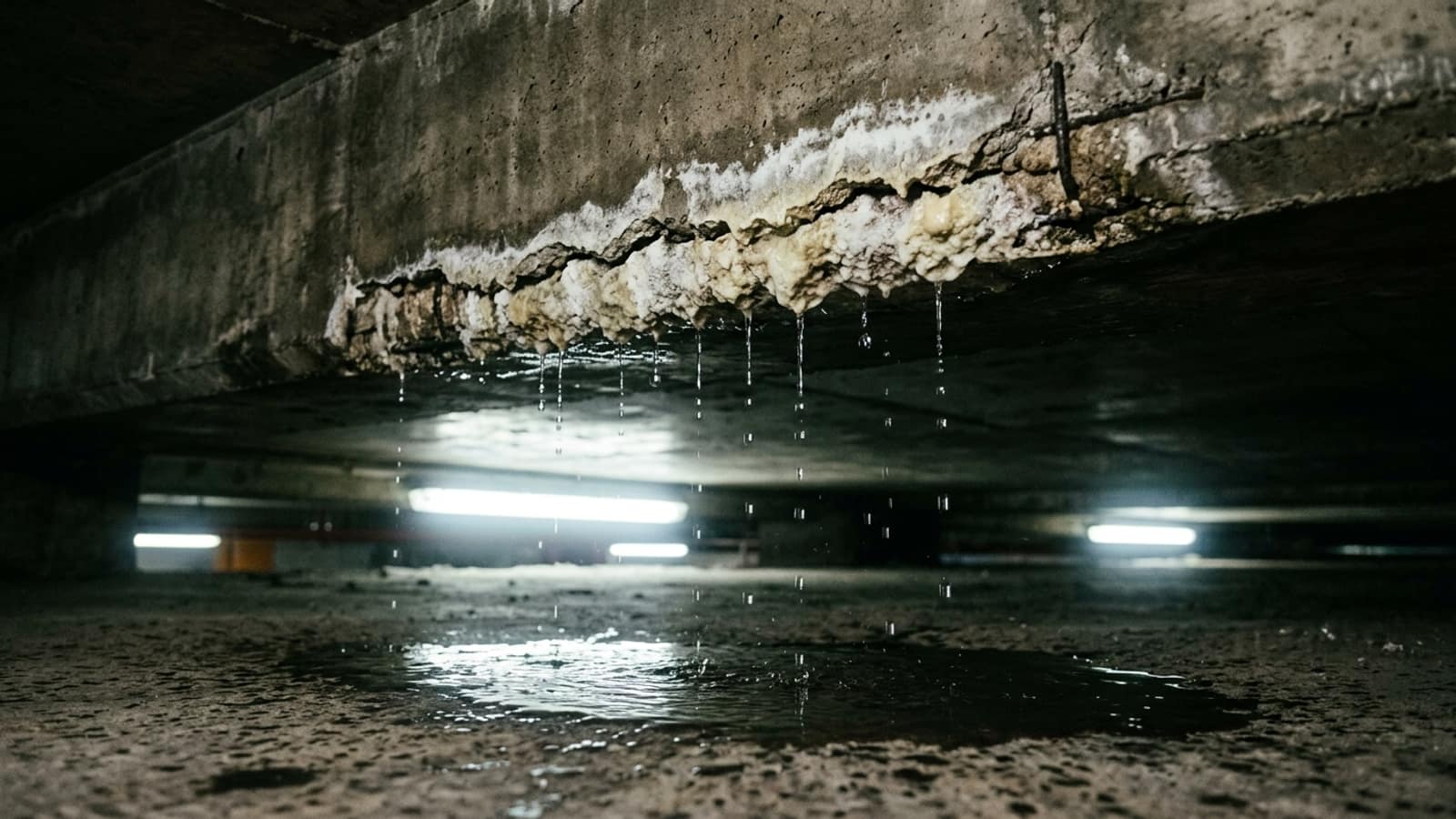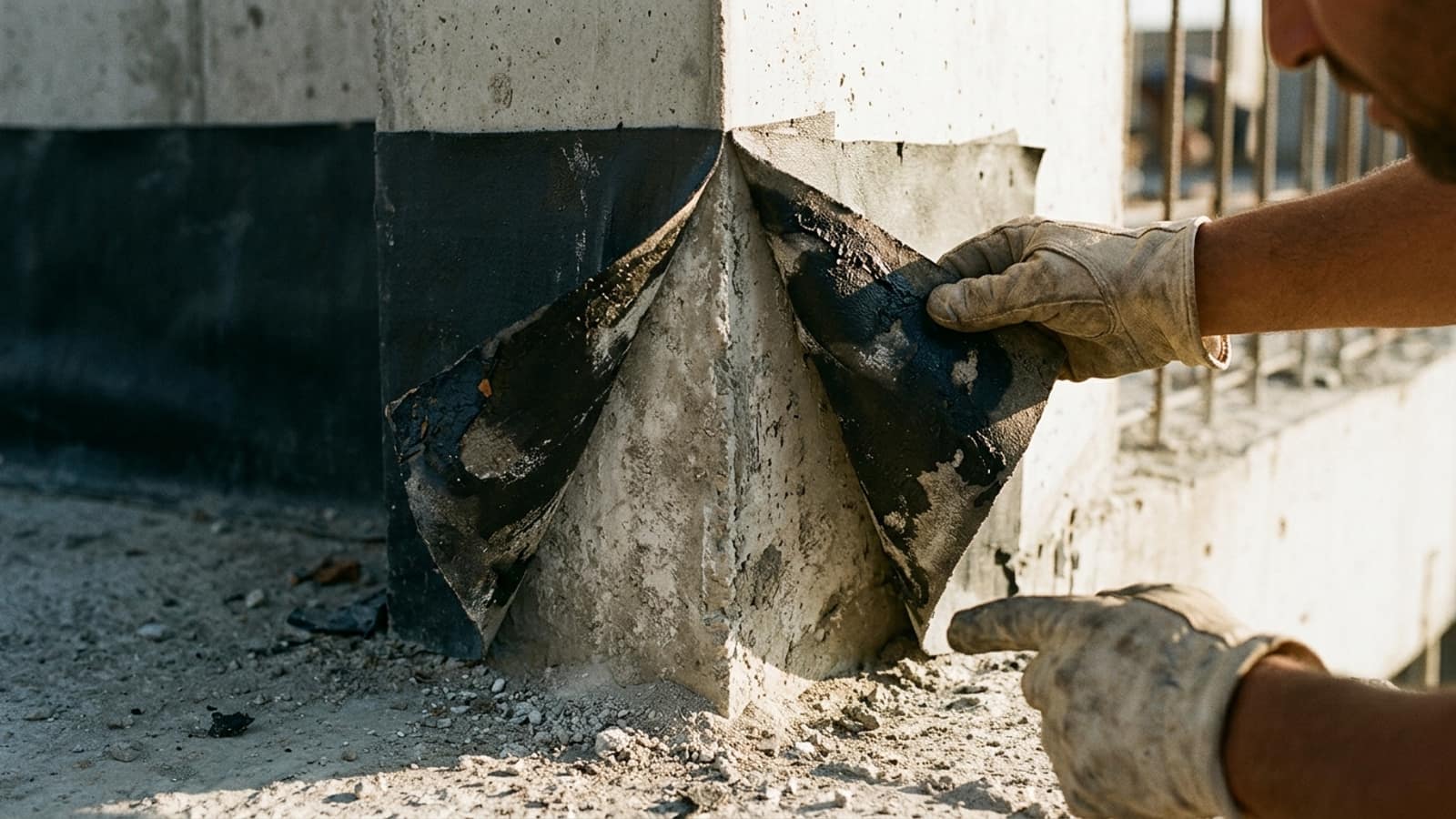
A membrane stretched over an expansion joint tears at the first movement cycle. The correct solution is not to prevent the movement but to leave the slack that will accommodate it.

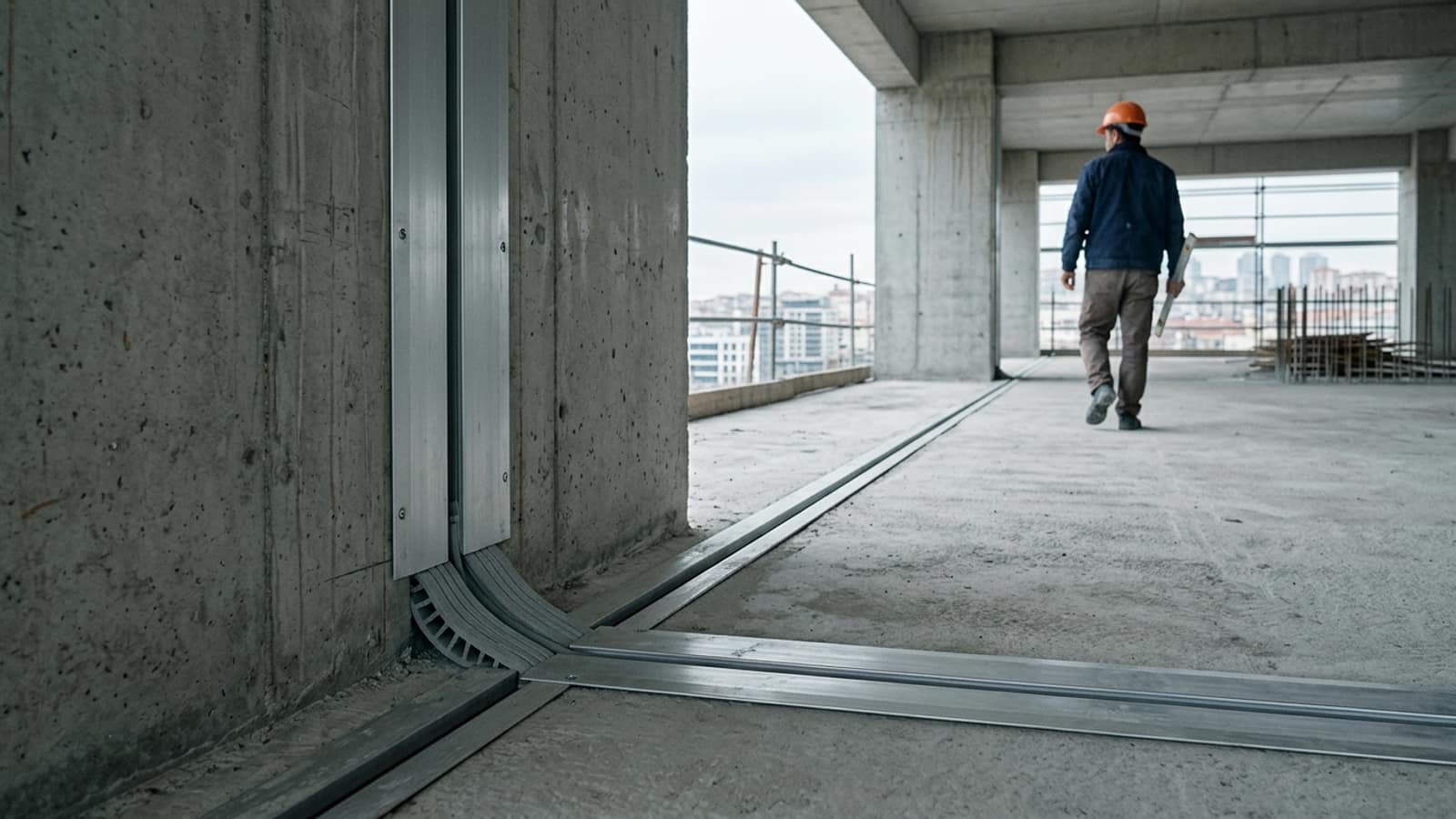
A joint is not a defect in a structure; it is a movement zone deliberately left in place. Concrete dries and shrinks; it expands with heat; the structure settles and sways during an earthquake. If these movements are not accommodated somewhere, the structure opens its own crack. Joints determine in advance where that movement will occur.
The problem is this: making a moving gap watertight is far harder than making a fixed surface watertight. In this article we cover joint types, why a membrane stretched over them tears, how to choose the right filler and tape, and the detail solutions that work on site.

A membrane stretched over an expansion joint tears at the first movement cycle. The correct solution is not to prevent the movement but to leave the slack that will accommodate it.
Ahmet Toka, General Manager
Not every joint is the same, and each calls for a different solution. On site we encounter four main types.
The first step in detail design is to determine how much that joint will move and in which direction. Without that, no material can be chosen.
A membrane laid flat over an expansion joint has to accommodate all the movement with its own elongation capacity. When the joint opens the membrane is stretched; if there is not enough elongation allowance it tears. When it closes it wrinkles, and fatigue cracks form in those folds.
The logic of the correct solution is different: leaving slack in advance to accommodate the movement. In practice this is done in two ways. The first is to lay the membrane over the joint with a loose loop (an omega detail); when the joint opens, that loop unfolds and the material is not stretched. The second is to use special joint tapes designed to accommodate movement.
There is also a hidden mistake: if the area of the membrane over the joint that must not be bonded is in fact bonded, the loop allowance loses its function. The detail works precisely because that free zone stays free.
A sound joint detail usually consists not of a single material but of layers working together.
Waterstops are placed inside the joint during concrete pouring and cut off the passage of water through the concrete section. PVC waterstops, swellable (bentonite or hydrophilic rubber) profiles and injection hoses belong to this group. An injection hose offers a further advantage: if the joint later lets water through, intervention can be made through the hose by injection .
The joint gap is brought to a set depth with a backer rod and an elastic sealant is applied over it. The backer rod does more than fill space: by ensuring the sealant bonds to only two faces (not three) it allows the material to stretch freely. When this detail is skipped, the sealant suffers cohesive failure at the first movement cycle. For material and application details see our joint sealing applications page.
Where the waterproofing layer crosses a joint, special tapes with a loop allowance to accommodate movement are used. The tape is bonded to the surface on both sides; the free zone in the middle accommodates the movement. In liquid systems such as polyurethane and polyurea, continuity is provided by applying an additional reinforced layer over the tape.
For the place of joints within waterproofing as a whole see our waterproofing page.
Make your surfaces durable and attractive with joint sealing applications. Achieve long-lasting results with the professional joint sealing solutions of Likit İzolasyon!
Service details →Permanently stop water ingress through cracks with injection waterproofing. Trust Likit İzolasyon for effective solutions in basements, car park walls and terrace slabs!
Service details →Give your structures complete protection against the harmful effects of water and damp with Likit İzolasyon! With our foundation, roof, wet area and façade waterproofing services we make your buildings durable and long-lasting. Get in touch now for professional service!
Service details →With concrete damage repair we bring durability and safety to your structures. Restore damaged structural elements with the professional solutions of Likit İzolasyon!
Service details →No. A joint is deliberately left so that the structure can move. If it is closed with rigid material the movement appears somewhere else, this time as an uncontrolled crack. What must be done is not to close it but to make it watertight in a way that accommodates the movement.
It depends on the product, the exposure and the amount of movement. The general approach is to inspect joints visually once a year and renew them when cracking, edge separation or hardening is seen on the surface. Sealant is not a permanent part of the structure but a component requiring maintenance.
Types placed inside the concrete can only be installed during pouring. Where later intervention is needed, the joint line is opened and a swellable profile or injection hose is installed from the surface, or the water is cut off directly by injection.
It is determined by the amount of movement calculated from the structure's length between joints, the expected temperature difference and the material's coefficient of expansion. The movement capacity of the sealant to be used is added to this. In practice the width given by the designer must be followed and never reduced by a site decision.
In joints crossed by vehicles, joint profiles resistant to mechanical load or high-hardness polyurethane sealants are used. Elasticity alone is not enough; a system is needed that does not deform under wheel loads and resists abrasion.
In most cases no. The sealant and filler are removed first and the joint is cleaned; if there is active water it is cut off by injection and the backer rod and sealant system is then rebuilt. If there is no structural problem this can be done zone by zone.
With over 25 years of field experience, let us determine the right solution for your building together. Contact us for a survey and quotation.
Over 25 years of field experience in waterproofing, floor coatings and structural strengthening. This article is based on applications encountered on site and the standards currently in force.