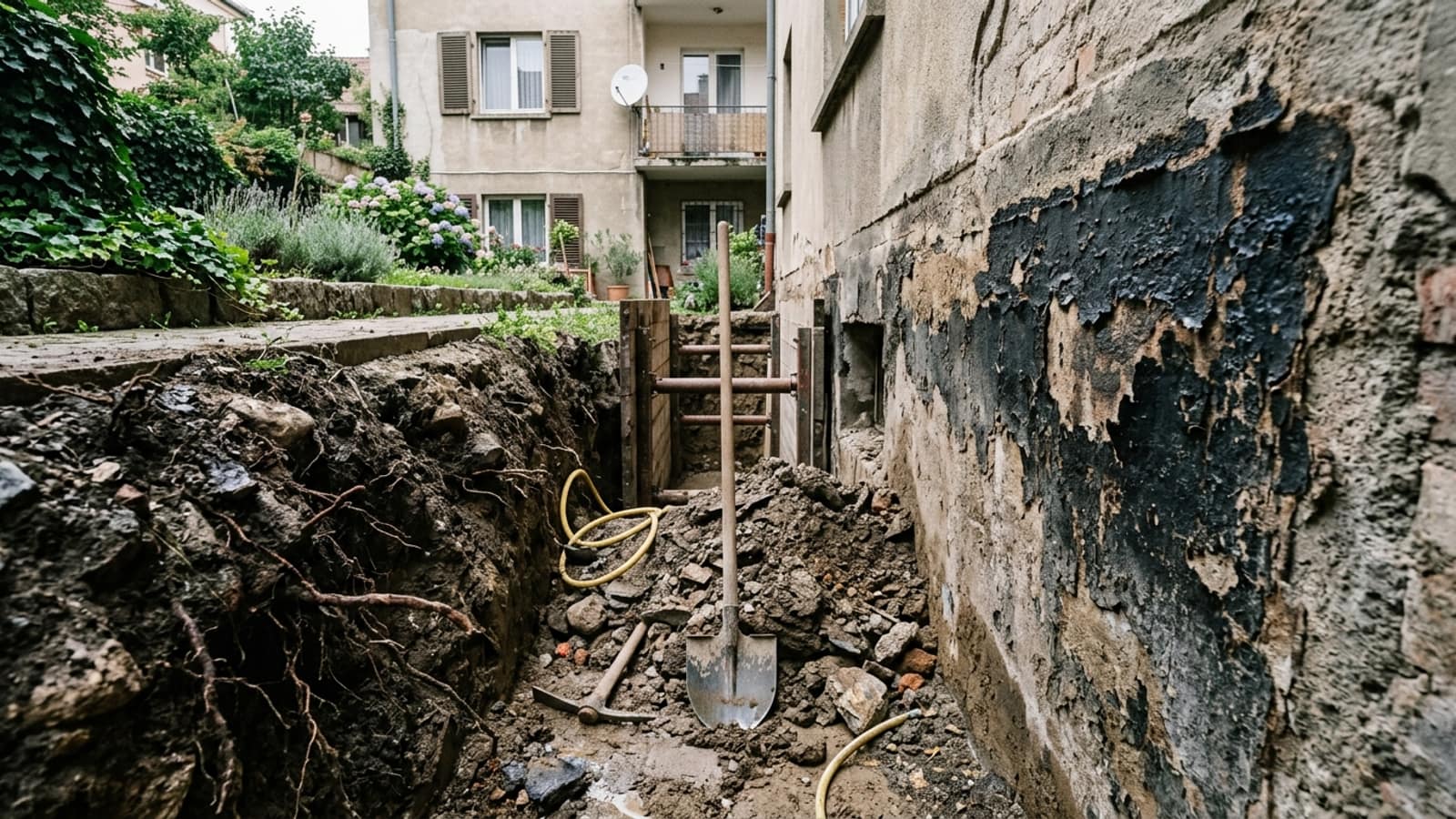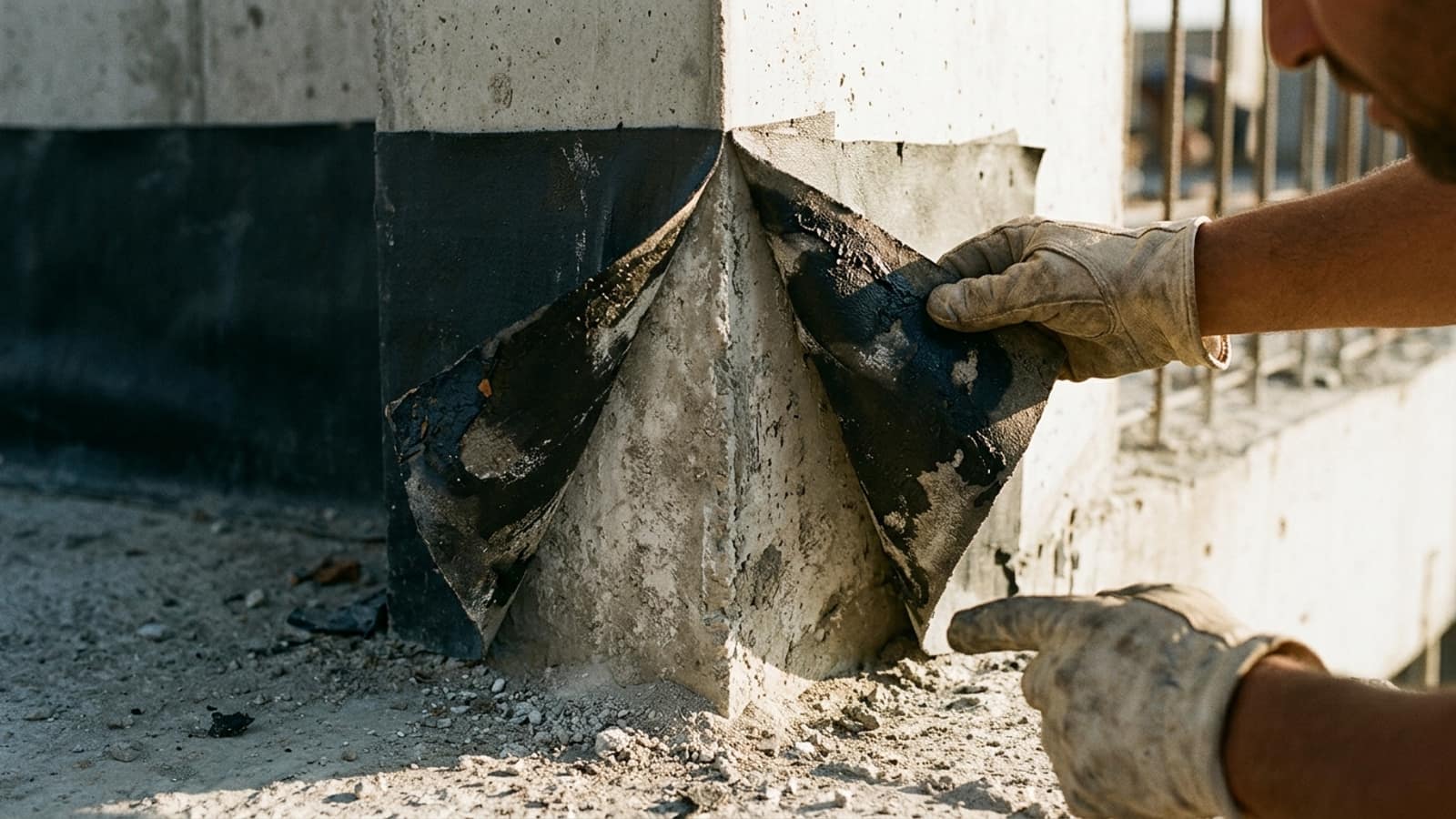
Injection stops the water but does not change the reason it is coming. If structural movement continues, the crack reopens; this is why the cause is identified first.

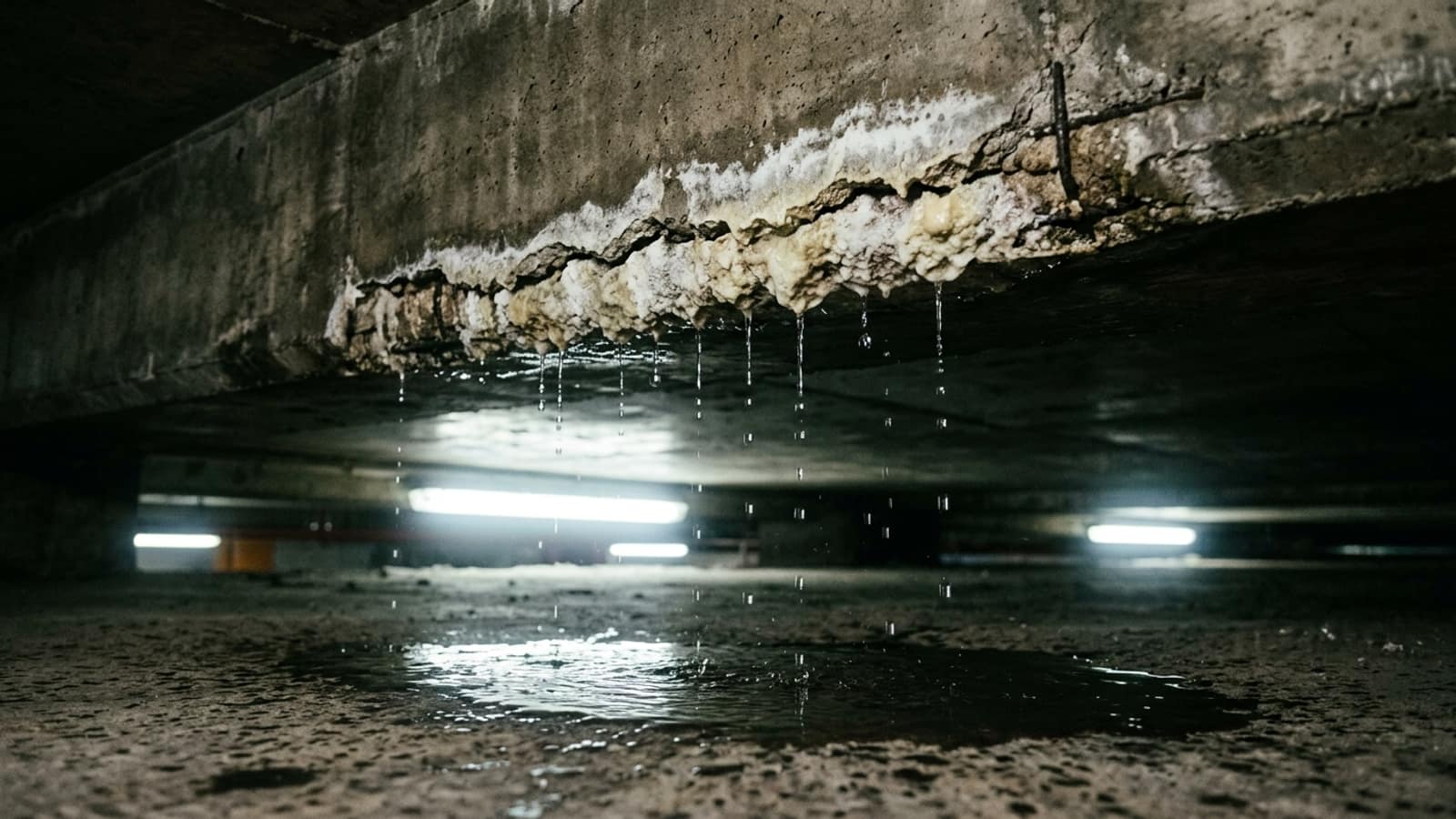
Most waterproofing methods share one condition: the surface must be dry. Injection is the exception to that rule. It can be applied while water is flowing; indeed, some resins work precisely because they come into contact with water. This property makes injection indispensable in occupied buildings, car parks, lift pits and tunnels.
In this article we explain what injection is, which resin is used in which situation, how the application proceeds step by step on site, and what the limits of the method are. At the end you will also find a realistic answer to the question "is injection permanent?".

Injection stops the water but does not change the reason it is coming. If structural movement continues, the crack reopens; this is why the cause is identified first.
Ahmet Toka, General Manager
Injection is the process of pumping liquid resin under controlled pressure into a crack, cold joint or void in a reinforced concrete element. The resin fills the void and, once cured, physically closes the path the water travels.
The method's greatest practical advantage is its low level of intervention. No excavation, removal of finishes or extensive breaking out is required; only small-diameter packer holes are drilled along the line of the crack. For this reason it can be applied in occupied buildings without stopping activity.
Its second advantage is access. Wherever the external face the water comes from cannot be reached (basement retaining walls, lift pits, tunnel linings, retaining walls), injection is one of the few methods that can work from inside.
Resin selection determines everything about the injection. An application made with the wrong resin fails even if it is carried out correctly.
On contact with water it reacts, foams rapidly, expands and fills the void, stopping the water. Actively leaking cracks are its main application. Because its expansion ratio is high it can also fill irregular voids. Its purpose is to cut off water; it does not provide structural bonding.
These types remain flexible once cured. They are used in cracks that open and close because of temperature differences or small structural movements. Where a rigid filler would break, an elastic resin follows the movement and maintains the seal.
Low-viscosity epoxy is injected into dry and non-moving cracks to restore the integrity of the section. Because it reaches a higher strength than concrete once cured, it is used in structural repair. It is not used in a crack where water is present; water prevents the resin from bonding to the concrete. For details on this see our crack repair page.
Thanks to their near-water viscosity they penetrate very fine hairline cracks and voids in the ground. They are also used to form an impermeable curtain between the structure and the soil by injecting behind a retaining wall. This application is called curtain injection and is an important option in structures that cannot be reached from outside.
For application details see our injection applications page.
The direct answer: if the crack is not moving and the reason the water is coming has not changed, yes, it is permanent. The resin has filled the void and stays there.
The cases where it is not permanent are equally clear. If there is settlement, post-earthquake movement, heavy vibration or continuous thermal expansion and contraction, the crack can reopen. Two things are then done: an elastic resin is selected to give a degree of movement tolerance and, more importantly, the cause of the movement is addressed structurally. If necessary, intervention in the load-bearing system is planned with reinforced concrete strengthening .
Another limit is wide voids. In very wide voids the volume is first reduced with a filling mortar and injection is then carried out. Injection is also a localised solution; if there is widespread permeability across the whole surface, then instead of a point intervention crystalline or cementitious surface systems are more appropriate.
Permanently stop water ingress through cracks with injection waterproofing. Trust Likit İzolasyon for effective solutions in basements, car park walls and terrace slabs!
Service details →With crack repair we bring durability and good looks to your buildings. Achieve long-lasting results by removing the causes of cracks with the professional solutions of Likit İzolasyon!
Service details →With concrete damage repair we bring durability and safety to your structures. Restore damaged structural elements with the professional solutions of Likit İzolasyon!
Service details →Give your structures complete protection against the harmful effects of water and damp with Likit İzolasyon! With our foundation, roof, wet area and façade waterproofing services we make your buildings durable and long-lasting. Get in touch now for professional service!
Service details →Yes. Polyurethane foam resins were developed for exactly this condition; they react on contact with water and expand to stop it. Being able to intervene without waiting for a dry environment is the method's greatest advantage.
No. Injection is carried out by drilling only small-diameter packer holes. No removal of finishes, excavation or extensive breaking out is required. For this reason it can be applied in occupied buildings, offices and car parks without stopping activity.
Polyurethane foam resins react within seconds; the leak stopping is usually observed during the application itself. The total duration depends on the length of the crack; on a typical basement wall it is completed within a few days.
Once the packers are removed the holes are made good with repair mortar and the surface is levelled. Slight colour differences may remain on a painted surface, so local paint touch-up should be planned after the application.
It depends on the resin viscosity. Acrylic gels can penetrate very fine hairline cracks, while polyurethane foams are effective in wider voids. In very wide voids the volume is first reduced with a filling mortar and injection is then carried out.
The presence of water is decisive. If water is coming through, polyurethane; if the crack is dry and the aim is to restore structural integrity, epoxy. Injecting epoxy into a crack with water present ends in failure; where necessary the water is first stopped with polyurethane and structural repair is then carried out with epoxy.
With over 25 years of field experience, let us determine the right solution for your building together. Contact us for a survey and quotation.
Over 25 years of field experience in waterproofing, floor coatings and structural strengthening. This article is based on applications encountered on site and the standards currently in force.