Polyurea is less a material than an application discipline. If the equipment is right, the surface is right and the crew is trained, the result is excellent; if any one of the three is missing, none of its advantages count for anything.

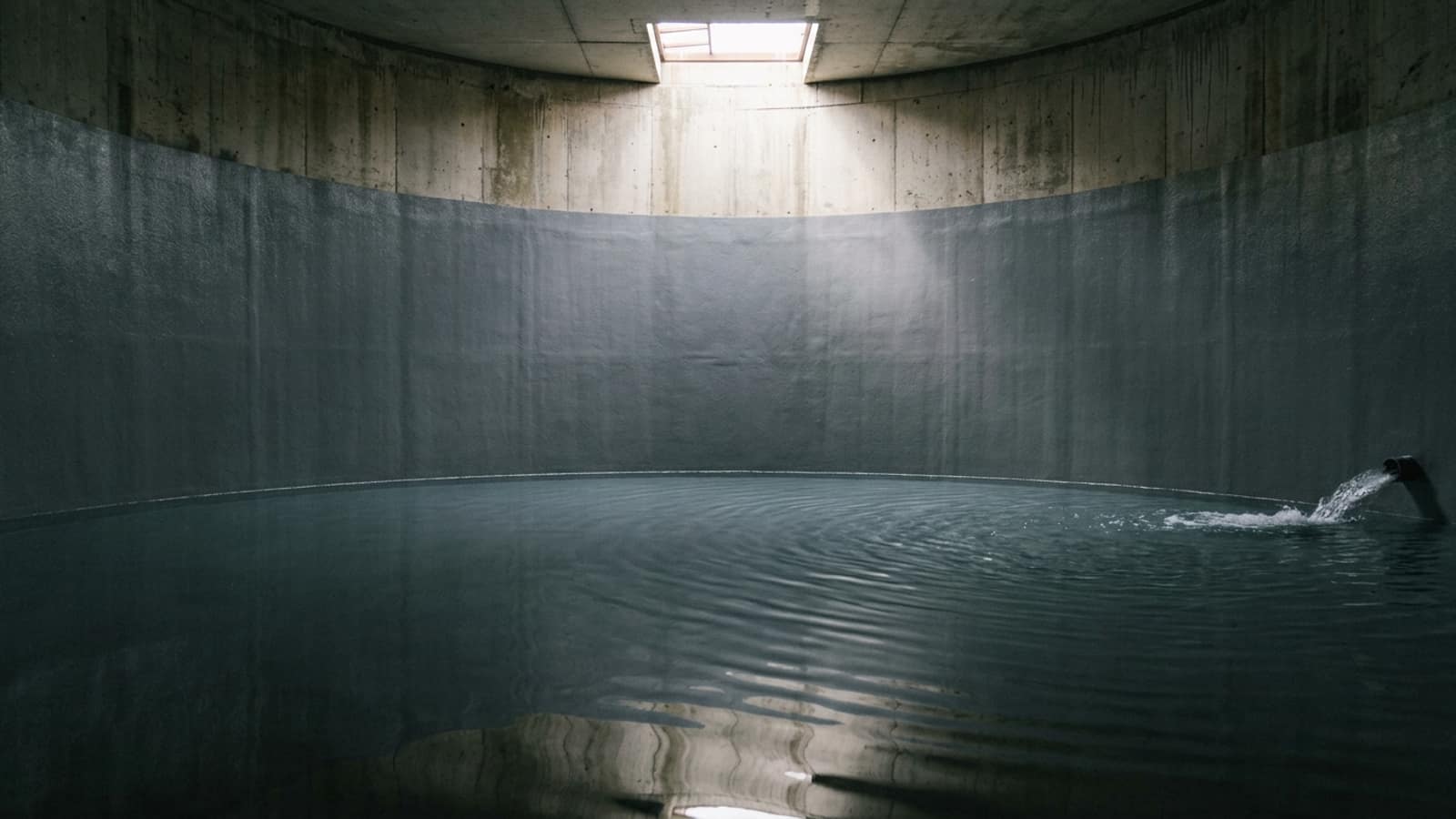
The time a water tank must be emptied and brought back into service sometimes determines an entire project. Where curing and waiting take days with conventional systems, a polyurea-coated surface can be ready for use within a few hours. That speed is the material's best-known property, but it is not its only advantage.
Polyurea is a seamless coating that cures within seconds, applied by heating two components with special equipment and spraying them at high pressure. In this article we explain how it works, in which jobs it genuinely makes a difference, when it should not be chosen, and what conditions the application requires.

Polyurea is less a material than an application discipline. If the equipment is right, the surface is right and the crew is trained, the result is excellent; if any one of the three is missing, none of its advantages count for anything.
Ahmet Toka, General Manager
Polyurea is an elastomer formed by the reaction of an isocyanate and an amine-based resin. The two components are heated to 60–80 °C at the tip of the spray gun, mixed under high pressure and sprayed onto the surface. The reaction is so fast that the material becomes touch-dry a few seconds after reaching the surface.
This speed comes from its chemistry: the reaction does not depend on a catalyst or on ambient moisture. For this reason, unlike polyurethane systems, polyurea can complete its cure at high humidity and low temperatures. Its application window is noticeably wide.
The resulting layer is seamless, can reach high thicknesses such as 2–3 mm in a single pass, and carries elasticity and abrasion resistance at the same time. Having both together is not a common combination in coating materials.
Polyurea is chosen for jobs where the advantages of speed and durability justify the cost.
For general application information see polyurea coatings page.
The advantages of polyurea emerge only when certain conditions are met. Those conditions also define the limits of the method.
| Criterion | Polyurea | Polyurethane | Epoxy |
|---|---|---|---|
| Curing time | Seconds | Hours–days | Hours–days |
| Elasticity | Very high | High | Low |
| Abrasion resistance | Very high | Medium–high | High |
| Curing in a damp environment | Trouble-free | Problematic | Problematic |
| Equipment requirement | Special machine | Simple | Simple |
| Economics on small surfaces | Poor | Good | Good |
| Possibility of correction | None | Yes | Yes |
The table points to a single conclusion: polyurea is the material for jobs where speed and durability are genuinely critical. On small, ordinary surfaces polyurethane-based systems are both more economical and easier to manage.
Achieve 100% waterproofing, seamless durability and attractive floor protection with pure polyurea coating. Get excellent results even on complex surfaces with Likit İzolasyon's innovative technologies!
Service details →Bring together 100% waterproofing and decorative solutions with polyurea coating. Create durable, attractive surfaces with Likit İzolasyon's spray application method!
Service details →Likit İzolasyon provides superior protection on roofs, terraces, foundations and wet areas with polyurethane-based waterproofing solutions. Contact us now for modern waterproofing solutions applied by spray and roller methods!
Service details →Give your structures complete protection against the harmful effects of water and damp with Likit İzolasyon! With our foundation, roof, wet area and façade waterproofing services we make your buildings durable and long-lasting. Get in touch now for professional service!
Service details →It can be applied to concrete, metal and many suitably prepared surfaces; however every surface calls for its own primer. What matters is the soundness of the surface: the bond strength of the coating cannot exceed the tensile strength of the surface beneath it. On a weak surface, repair is needed first.
Foot traffic is possible within a few hours with most products; full chemical resistance is usually reached within a day depending on the product and ambient conditions. This is the greatest advantage in places such as water tanks and production facilities where downtime is costly.
Only products with a certificate of suitability for human health can be used. Uncertified products should not be used in drinking water reservoirs even if they appear technically suitable. Product documentation must be requested before application.
Most of the cost comes not from the material but from equipment and expertise. A heated high-pressure machine, a generator and a trained crew raise the unit cost on small surfaces. On large surfaces and in facilities where downtime is costly, it becomes competitive on total cost.
If the existing coating is sound, clean and compatible, it can be applied with a suitable primer. However the bond strength of the old coating must be measured; an application made over a weak layer lifts together with that layer. In most cases removing the old coating by mechanical surface preparation is safer.
Aromatic types change colour and lose gloss under UV; this is a visual change and does not directly end the waterproofing performance. On exposed surfaces where appearance matters, colour stability is achieved by applying an aliphatic top coat.
With over 25 years of field experience, let us determine the right solution for your building together. Contact us for a survey and quotation.
Over 25 years of field experience in waterproofing, floor coatings and structural strengthening. This article is based on applications encountered on site and the standards currently in force.