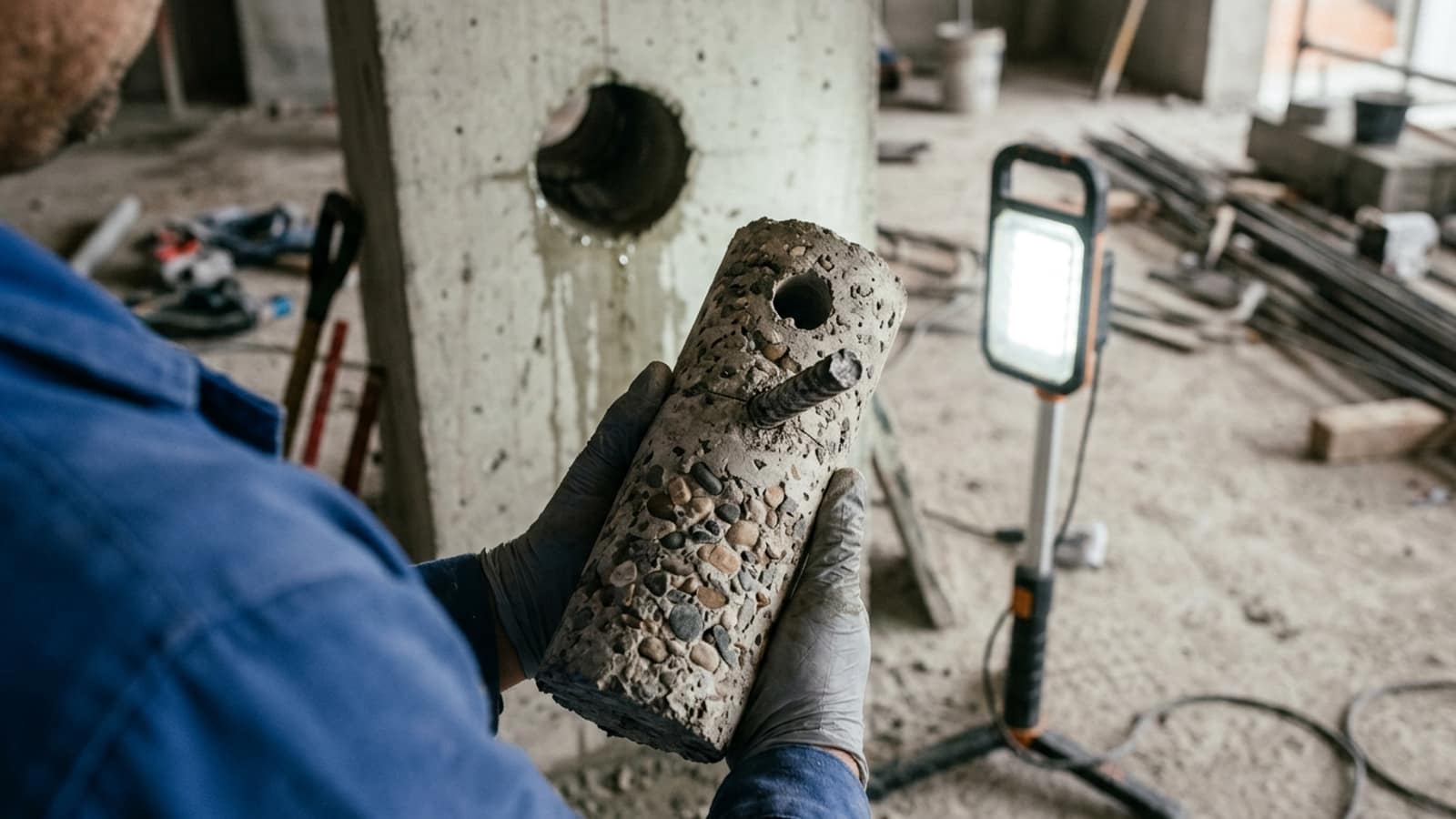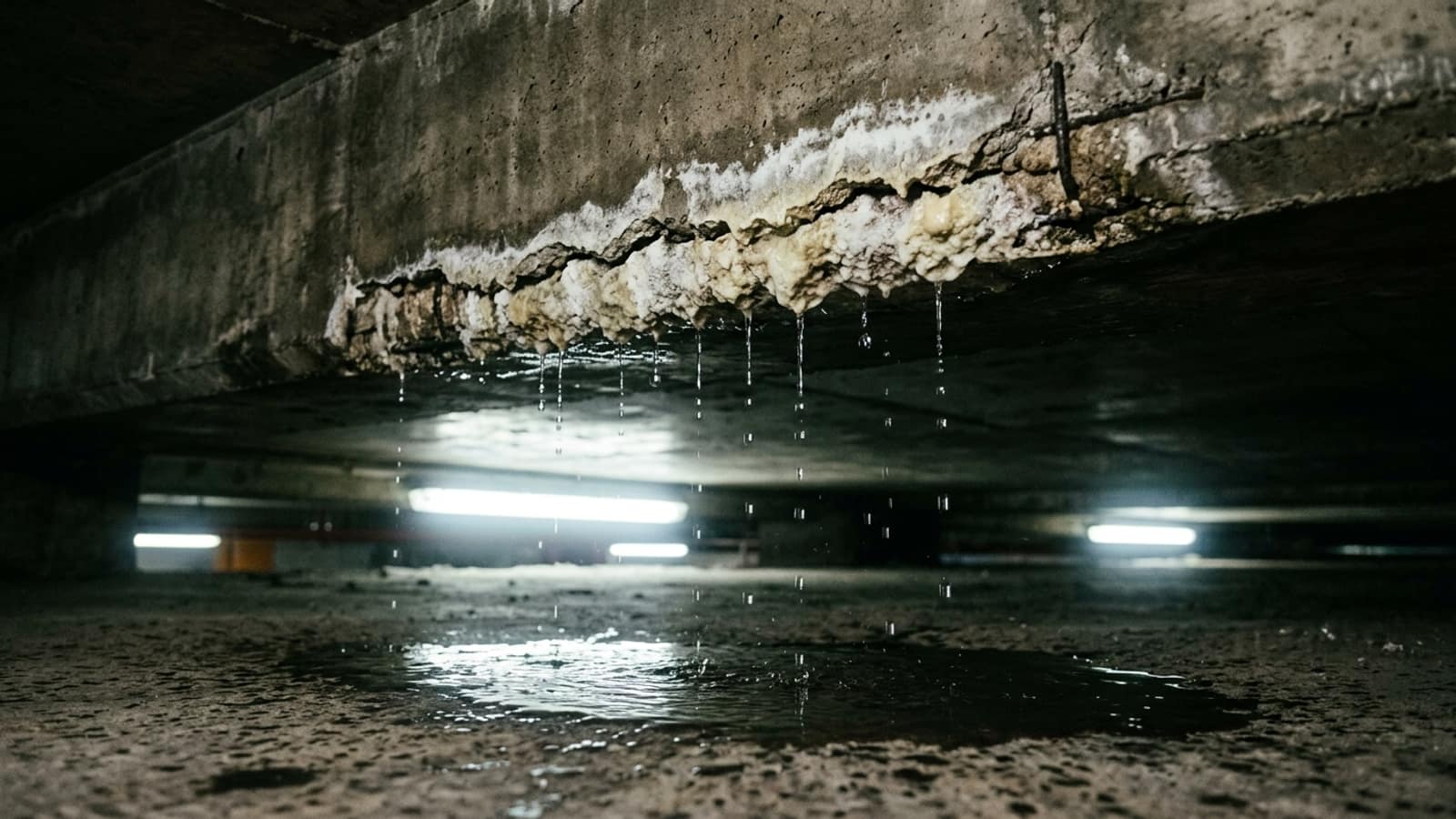
Filling a crack is not the same as solving it. Unless the reason it opened is found first, the same crack reappears in the same place.

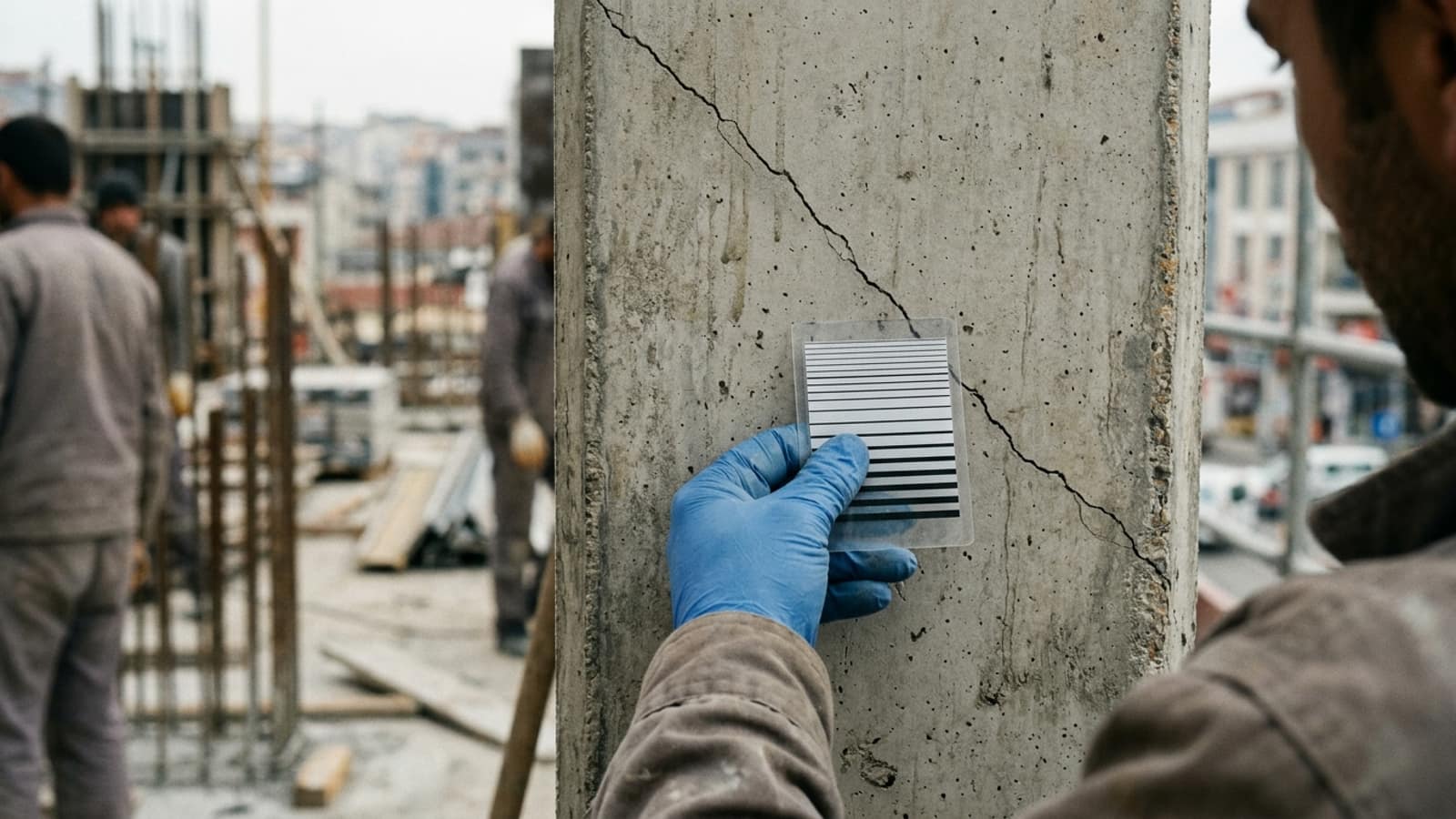
Not every crack in concrete is a sign of danger; but every crack carries information. A shrinkage crack tells you about the drying behaviour of the concrete, a diagonal crack about shear stress, and a crack running along the line of the reinforcement about corrosion that has already begun. Read correctly, a crack is the clearest signal a structure gives about itself.
In this article we explain how to tell the types of crack apart, which ones require urgent action, how to measure whether a crack is moving, and the correct repair method for each type.

Filling a crack is not the same as solving it. Unless the reason it opened is found first, the same crack reappears in the same place.
Ahmet Toka, General Manager
The signs looked at when assessing the urgency of a crack are as follows:
If any of these signs is present, assessment must come before superficial repair; if necessary it is addressed within the scope of structural strengthening it is addressed.
The repair method is chosen according to whether the crack moves. There are practical ways of establishing this.
The monitoring period is generally a few months. That may seem long, but the cost of carrying out a rigid repair on a moving crack is far higher.
The right method is chosen according to the type of crack and the objective.
Used on dry, non-moving cracks to restore the integrity of the section. When cured it reaches a strength higher than the concrete and the member behaves monolithically again. It is not used on cracks with water coming through. Details: crack repair.
Used on cracks with active water; it reacts with the water and expands to close the path. It provides no structural strength; its purpose is watertightness. Details: injection applications.
On moving cracks, the crack is treated as a joint: a channel is cut, a backer rod is inserted and an elastic sealant is applied. In this way the movement is not restrained, only watertightness is provided. Details: joint sealing applications.
With corrosion cracks the approach is different: loose concrete is removed, the reinforcement is cleaned and derusted, a protective (passivating) primer is applied and the section is reinstated with repair mortar. The surface is then protected against carbonation and chlorides with a concrete protection coating. Where the damage is extensive, concrete damage repair and concrete maintenance and repair processes come into play.
The permanence of a repair depends on the cause of the crack being removed. This is usually a separate item of work from the repair, and if it is skipped the same crack returns.
Observing the area at intervals after repair and keeping records is the simplest verification of whether the solution is working.
With crack repair we bring durability and good looks to your buildings. Achieve long-lasting results by removing the causes of cracks with the professional solutions of Likit İzolasyon!
Service details →With concrete damage repair we bring durability and safety to your structures. Restore damaged structural elements with the professional solutions of Likit İzolasyon!
Service details →With concrete protection services we make your surfaces durable and attractive. Give your structures a long life with the clear and coloured protection solutions of Likit İzolasyon!
Service details →We give your structures durability and an attractive finish with concrete maintenance and repair. Protect your structures with Likit İzolasyon's solutions that prevent corrosion and deliver long service life!
Service details →No. Superficial shrinkage cracks carry no structural risk; however, because they make the surface permeable they leave the door open to water and chemical ingress. Structural, corrosion and settlement cracks, on the other hand, require assessment.
Width alone is not a sufficient criterion; position, direction, rate of growth and the presence of water are assessed together. A fine but growing crack in a critical area can be more important than a wide but stable crack in a non-critical area.
That only improves the appearance. Structural integrity is not restored, water ingress does not stop in most cases, and if the crack is moving the filler cracks again within a short time. Covering up is no substitute for diagnosis.
If the crack does not move and its cause has been removed, it will not. If there is settlement, vibration or continuous thermal movement in the structure, it can. In those cases an elastic solution is chosen instead of rigid epoxy and the cause of the movement is dealt with separately.
This is a clear sign that corrosion has begun, and waiting leads to loss of section. Loose concrete is removed, the reinforcement is cleaned and passivated, the section is reinstated with repair mortar and a surface protection coating is applied.
Concrete loses volume as it dries and fine shrinkage cracks may form; this is expected behaviour. However, cracks whose position is significant in load-bearing members (diagonal at a beam support, horizontal in a column) require assessment even in a new building.
With over 25 years of field experience, let us determine the right solution for your building together. Contact us for a survey and quotation.
Over 25 years of field experience in waterproofing, floor coatings and structural strengthening. This article is based on applications encountered on site and the standards currently in force.