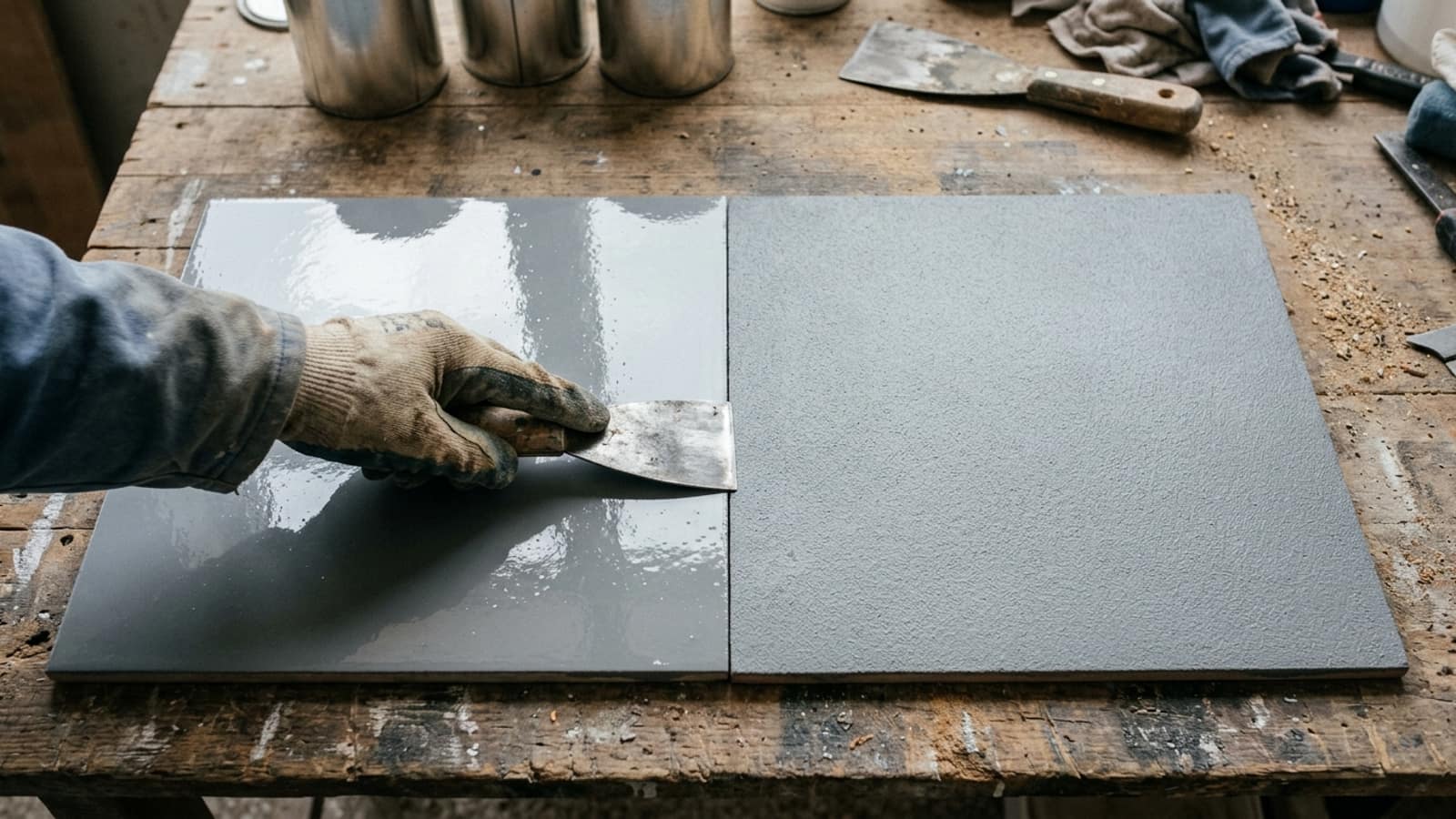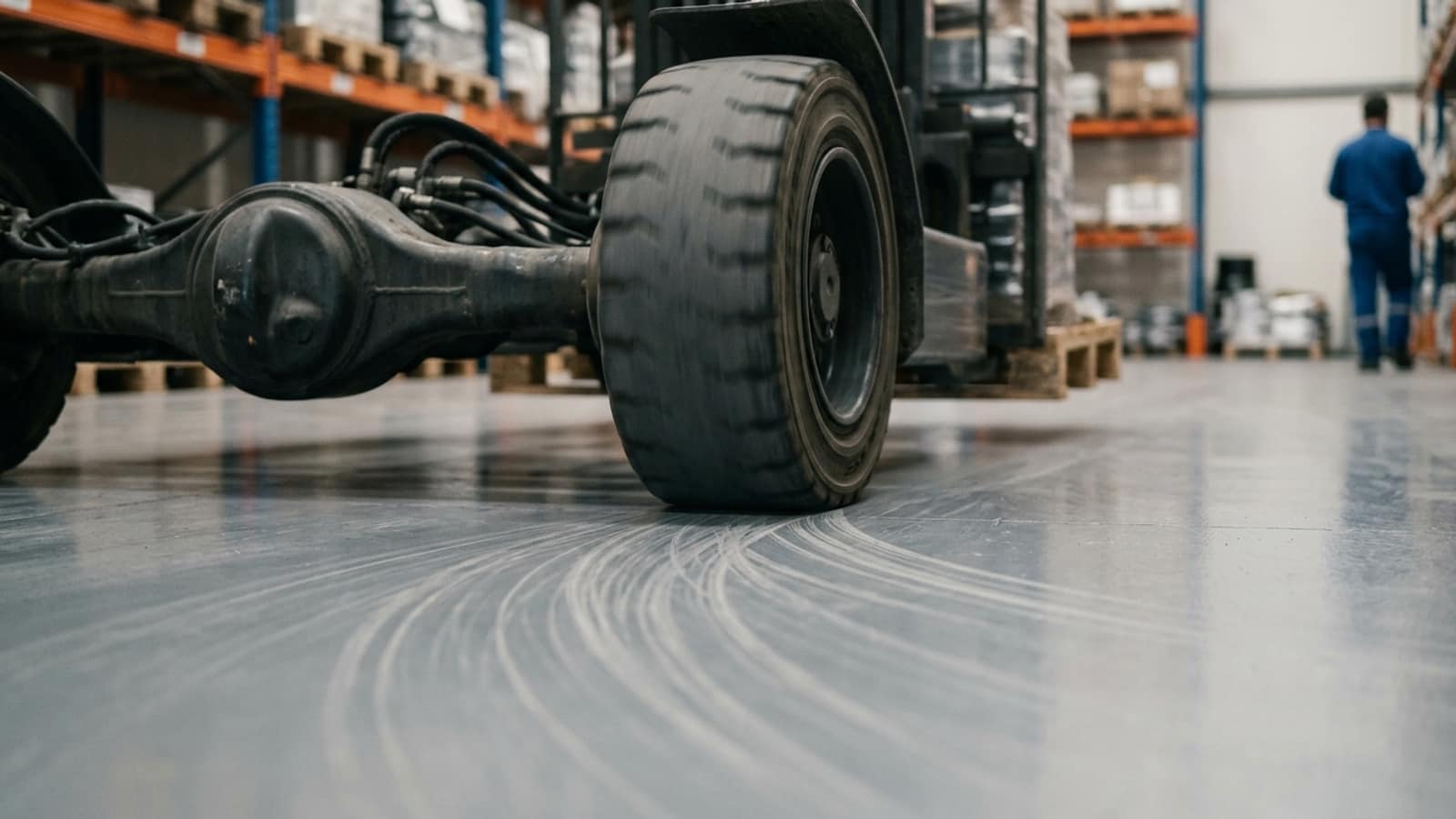
In a food plant the floor is chosen according to the cleaning regime. If hot water and steam are used, the discussion ends: the system has to withstand thermal shock.

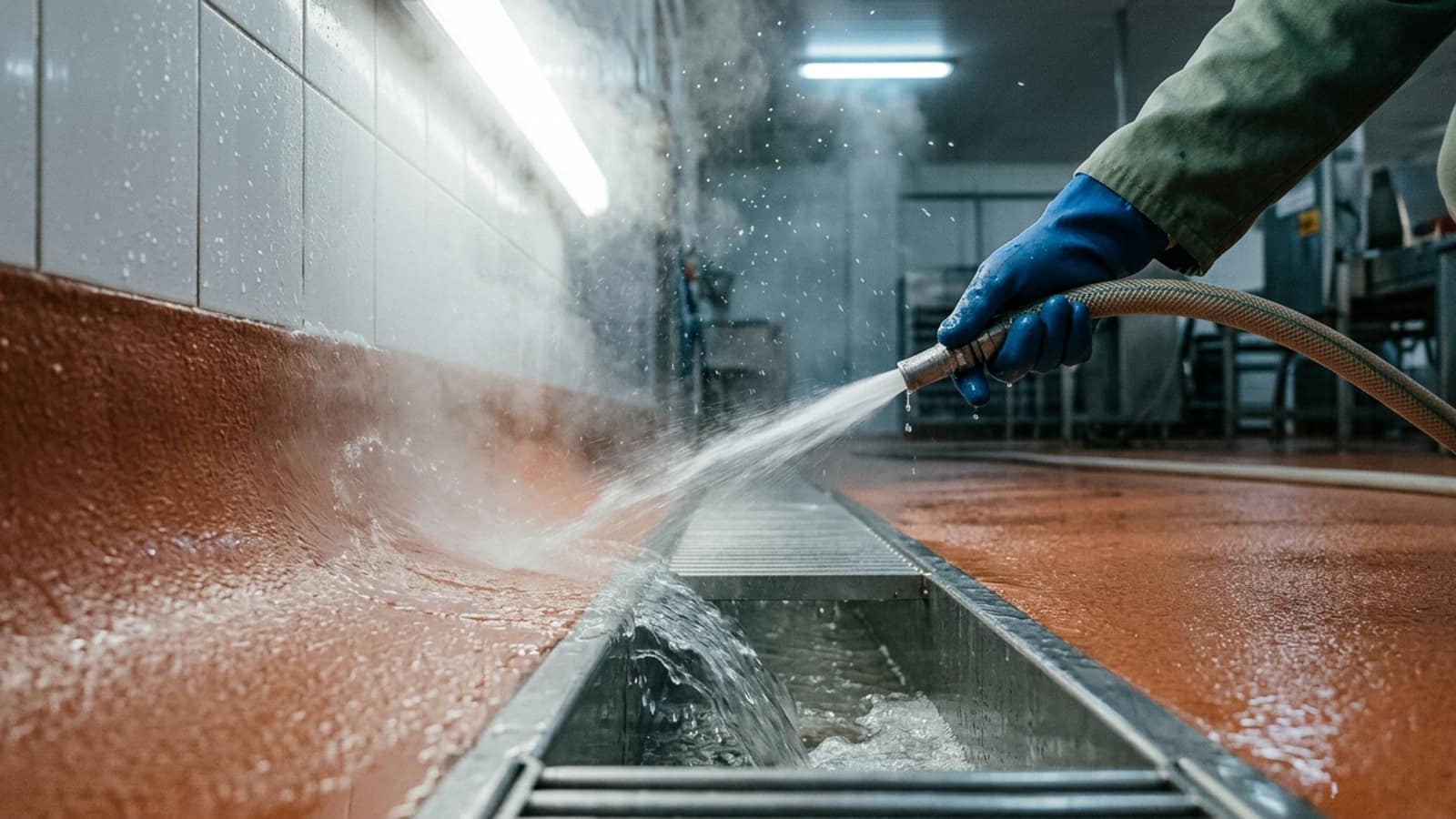
Almost every floor coating failure in food production plants comes out of the same scenario: the floor is washed with hot water or steam, the coating and the concrete expand at different rates, the stress between them overcomes the bond and the layer lifts. This is a problem of system selection, not of material quality.
Polyurethane concrete is a system developed to solve exactly this problem. In this article we explain how it works, why it differs from epoxy, what thickness it should be applied at and how the hygiene details should be built.

In a food plant the floor is chosen according to the cleaning regime. If hot water and steam are used, the discussion ends: the system has to withstand thermal shock.
Ahmet Toka, General Manager
Every material has a coefficient of thermal expansion, which determines how much it lengthens and shortens when the temperature changes. Concrete and resin coatings have different coefficients.
When water at 80 °C is poured onto the floor, the coating layer heats up and expands rapidly, while the thick mass of concrete beneath it reacts far more slowly. This differing movement between the two layers creates shear stress at the bond interface. Nothing happens the first time; but repeated several times a day, this cycle gradually fatigues the bond and the layer begins to lift at the edges or around the joints.
With standard epoxy systems this can be seen within the first year after the plant comes into service. The source of the problem is not the quality of the coating but the fact that it was not designed for that use.
Polyurethane concrete (PU concrete, polyurethane cement) is a hybrid system in which polyurethane resin, cement and selected aggregates are used together. Thanks to its cement content, its thermal expansion behaviour is very close to that of concrete. In other words, the coating and the substrate move together and the stress created by thermal shock is largely eliminated.
The second important property of the system is its moisture tolerance. Because it contains cement it can be applied to fresh, damp concrete; this removes the concrete drying time that is a serious constraint in epoxy and polyurethane systems. In newly built facilities this saves weeks in the programme.
Its third property is chemical resistance: it resists lactic acid, fatty acids, sugar solutions and cleaning chemicals. The organic acids encountered in food production soften standard epoxy over time, whereas PU concrete withstands them. Details: polyurethane concrete coating.
Polyurethane concrete is a system that behaves differently according to thickness. The thickness decision is an engineering decision based on the conditions of use, not an aesthetic one.
The surface texture is chosen separately. In wet and greasy areas the aggregate density is increased for slip resistance; this requires striking a balance between cleanability and safety. An excessively rough surface increases slip safety but makes cleaning harder.
In a food plant the success of a floor coating is measured not in the open areas but in the details. These are also the points that cause problems in inspections.
For a comparison with other floor systems see floor coating applications page.
Achieve hygienic, long-lasting floor solutions with high chemical and mechanical resistance using polyurethane concrete flooring. Discover the dependable services of Likit İzolasyon!
Service details →Protect your structures against external factors with floor coating applications from Likit İzolasyon. Discover our solutions offering hygiene, durability and aesthetics!
Service details →Make your surfaces durable and attractive with joint sealing applications. Achieve long-lasting results with the professional joint sealing solutions of Likit İzolasyon!
Service details →With concrete damage repair we bring durability and safety to your structures. Restore damaged structural elements with the professional solutions of Likit İzolasyon!
Service details →The cost per square metre is generally higher. However, in a plant washed with hot water, once you take into account that an epoxy coating has to be renewed every few years, the total cost of ownership turns in favour of polyurethane concrete. The comparison should be made on annual cost.
Yes; this is one of the system's most practical advantages. Because it contains cement it can be applied to damp, young concrete, removing the long drying wait required with epoxy systems. Even so, the minimum concrete age and strength conditions stated by the manufacturer must be observed.
The surface texture is set as required. In wet and greasy areas the aggregate density is increased to provide high slip resistance. This setting strikes a deliberate balance between cleanability and safety; neither extreme is wanted.
Dairy and dairy products, meat processing, beverage filling, bakery and patisserie production, catering kitchens, cold stores and pharmaceutical manufacturing are the main ones. What they have in common is a hot/wet cleaning regime and exposure to organic acids.
The existing coating usually has to be removed. The performance of polyurethane concrete comes from its bonding directly to the concrete. An old layer trapped in between becomes the weakest link in the system.
When the right thickness is chosen and the details are correctly resolved, it serves for many years under food plant conditions. The main factors determining its life are the choice of thickness, the edge anchors and correctly setting the drainage falls; the material class alone is not decisive.
With over 25 years of field experience, let us determine the right solution for your building together. Contact us for a survey and quotation.
Over 25 years of field experience in waterproofing, floor coatings and structural strengthening. This article is based on applications encountered on site and the standards currently in force.