Single and two-component paints are high-performance paints used for surface coating and protection, bringing durability and good looks together. These paints have a wide range of use extending from industrial facilities to commercial spaces. The single or two-component option is chosen according to the type of surface to be treated and its requirements.
Single-component paints stand out for their ease of application and fast drying. They are generally used for low-traffic areas and decorative applications.
Two-component paints are products activated by mixing two different components, offering high mechanical, chemical and environmental resistance. They are an ideal solution for floors exposed to wear, impact and chemicals.
 Durability: Provides high resistance to chemical, mechanical and environmental effects. Attractive Appearance: Offers a decorative finish with different colour and surface options. Easy Application: Single-component paints can be applied quickly and practically. High Performance: Two-component paints deliver superior performance under heavy traffic and demanding conditions. Wide Range of Use: Suitable for warehouses, car parks, factories and commercial spaces. Surface Preparation: The surface to be treated is cleaned and prepared. Material Selection: A single or two-component paint is chosen according to the requirements of the surface. Application: The paint is applied by professional teams using the specified techniques. Drying and Inspection: The drying process is completed and the durability of the paint is checked.
With the use of quality materials and its professional teams in single and two-component paint applications, Likit İzolasyon makes your buildings attractive and durable. Contact us for solutions suited to your areas of application.
Traffic lanes and zone markings on factory and warehouse floors Car park line marking and numbering applications Protective paint on steel structures, machinery and equipment surfaces Cleanable hygienic paint on wall and column surfaces Corrosion protection on silos, tanks and pipelinesThese are used straight from the tin; drying takes place through evaporation of the solvent or reaction with the moisture in the air. They are easy to apply, low in cost, and carry no risk of mixing errors. They are suitable for moderate mechanical and chemical loads.
A chemical reaction begins when the resin and hardener are mixed in a specified ratio. The cross-linked structure that forms provides far higher resistance to wear, chemicals and fuel. Observing the mixing ratio and the pot life is essential.
Traffic density, chemical exposure, frequency of renewal and budget are considered together. In areas where the layout changes frequently, single-component paint is economical; for permanent, heavy use, two-component paint lowers the total cost.
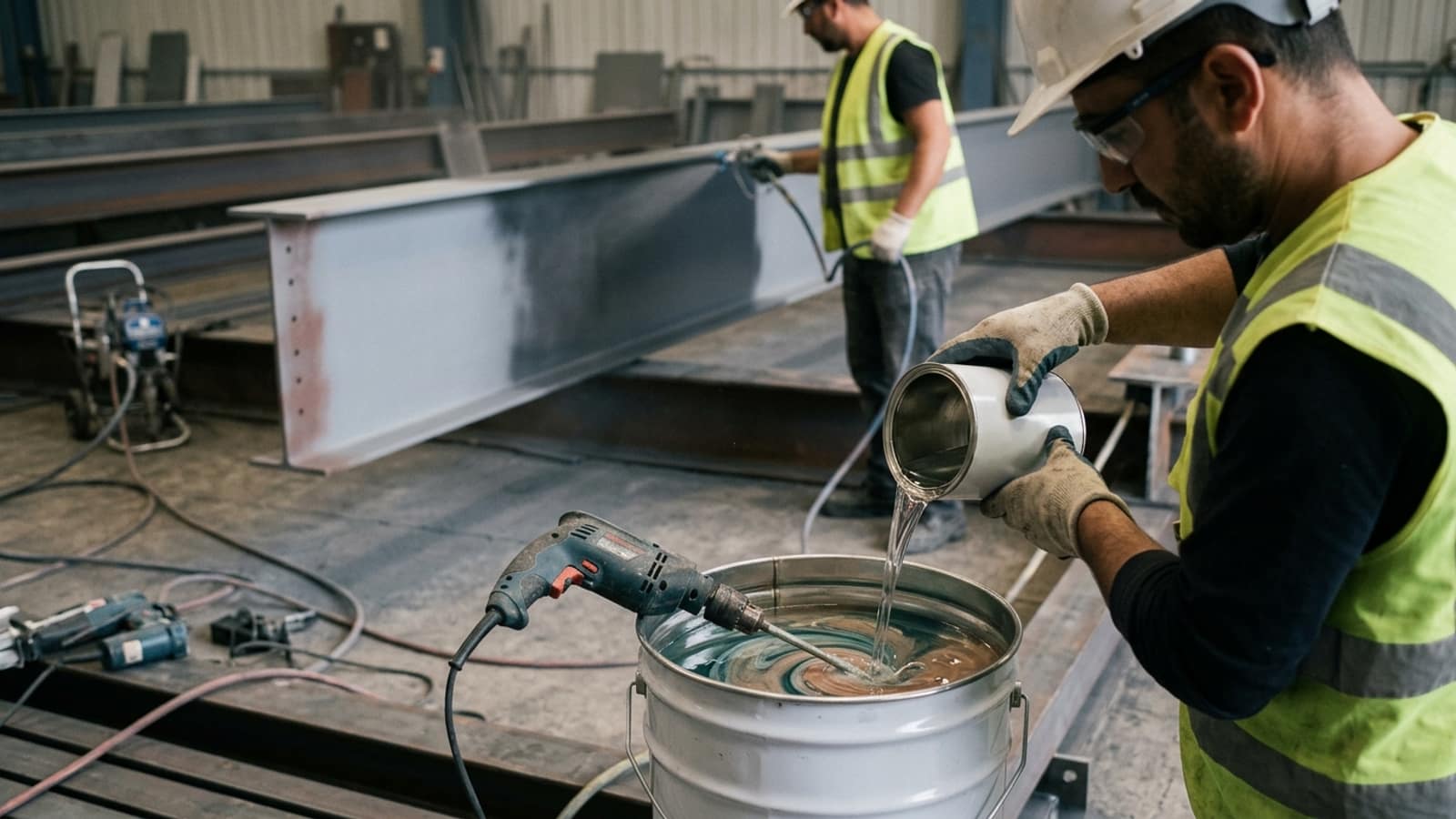
1. Surface assessment: The condition of the floor or metal surface, the compatibility of the existing paint and the exposure conditions are determined. 2. Surface preparation: Suitable roughness is achieved by grinding on concrete surfaces and by blasting or mechanical cleaning on metal surfaces. Oil and rust are removed completely. 3. Primer: A primer suited to the type of surface is applied; a corrosion-inhibiting primer is used on metal and a primer that evens out absorbency on concrete. 4. Mixing and application: With two-component products the ratio is kept precise and a mechanical mixer is used. Application is by brush, roller or airless spray. 5. Curing and inspection: The waiting times between coats are observed. The system is verified by measuring the dry film thickness. For the protection of steel structures against corrosion by paint, TS EN ISO 12944 corrosion categories and paint systems are taken as the basis. With two-component products, an incorrect mixing ratio leads to the paint not curing at all or remaining tacky. The usable time after mixing is limited; only as much as can be applied should be prepared. Measuring the dry film thickness is the fundamental method of verifying performance in corrosion protection systems.In terms of performance, yes, but it is not necessary on every project. In low-traffic areas or facilities where the markings are changed frequently, single-component paint is more economical and practical. The decision is made by comparing the expected service life with the cost.
With two-component products the most common cause is an incorrect mixing ratio or inadequate mixing. Application at a very low temperature also stops curing. In this case the layer must be removed and applied again.
Complete removal of rust, mill scale and oil is essential. The most reliable method is blasting; mechanical cleaning is adequate only in limited conditions. Inadequate preparation causes even the highest quality paint to blister within a short time.
This is determined by the target dry film thickness; generally two top coats are applied over the primer. Applying thin coats rather than a single thick one prevents runs and curing problems.

Likit İzolasyon exceeded our expectations with their waterproofing and floor coating services. Thanks to their meticulous workmanship and on-time delivery, our building is now far safer and more durable.
During our building strengthening works we saw the difference of working with a professional team. With carbon fibre and concrete repair applications they gave our structure a new life. I would definitely recommend them!
We used their epoxy floor coating service and the result is incredible! We gained both an attractive appearance and a long-lasting, durable solution. I appreciate their professional approach.
We received terrace and foundation waterproofing services. With their polyurethane-based solutions in particular, they provided a permanent answer to water leaks. The team's professionalism and on-time delivery are truly commendable.
Concrete cracks and deterioration in our old building were causing serious problems. The Likit İzolasyon team made the structure safe again with concrete repair and protection. They kept us informed in detail at every stage of the process.
They did outstanding work on car park line marking and industrial painting projects. With thermoplastic paint they delivered a solution that is both attractive and long-lasting. The importance they place on occupational safety is a further plus!
We had epoxy and polyurethane floor coating applied in our factory. Our spaces gained both a durable and an attractive appearance. They are also very easy to clean. Thank you to the professional team!
We worked with Likit İzolasyon on building strengthening. Thanks to the carbon fibre application our structure became earthquake resistant. Their transparent and meticulous work from start to finish gave us confidence.
The concrete crack repair service completely solved the problems in our old building. Even the finest details were attended to during the work. We now have a structure we can use safely for many years.