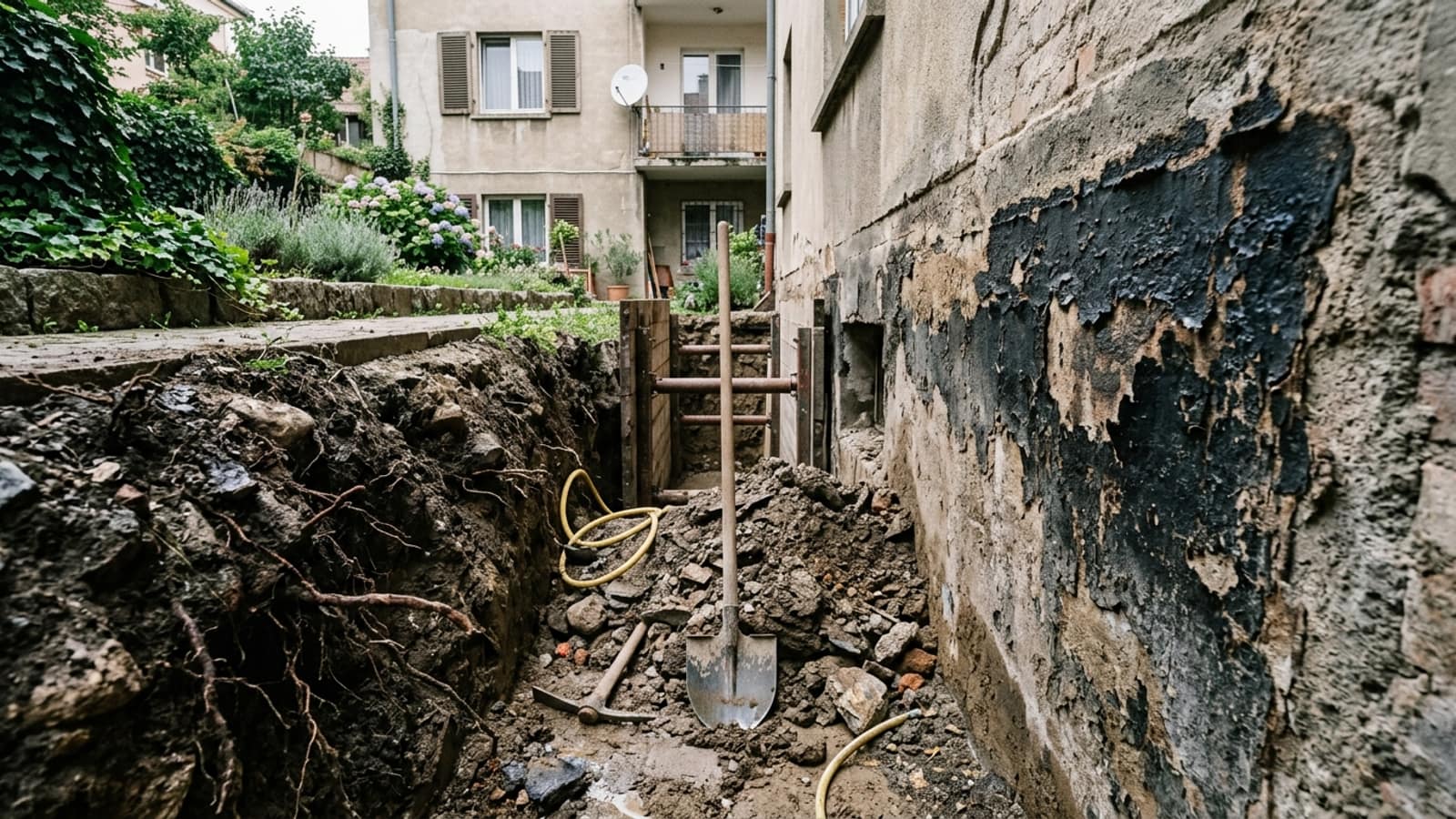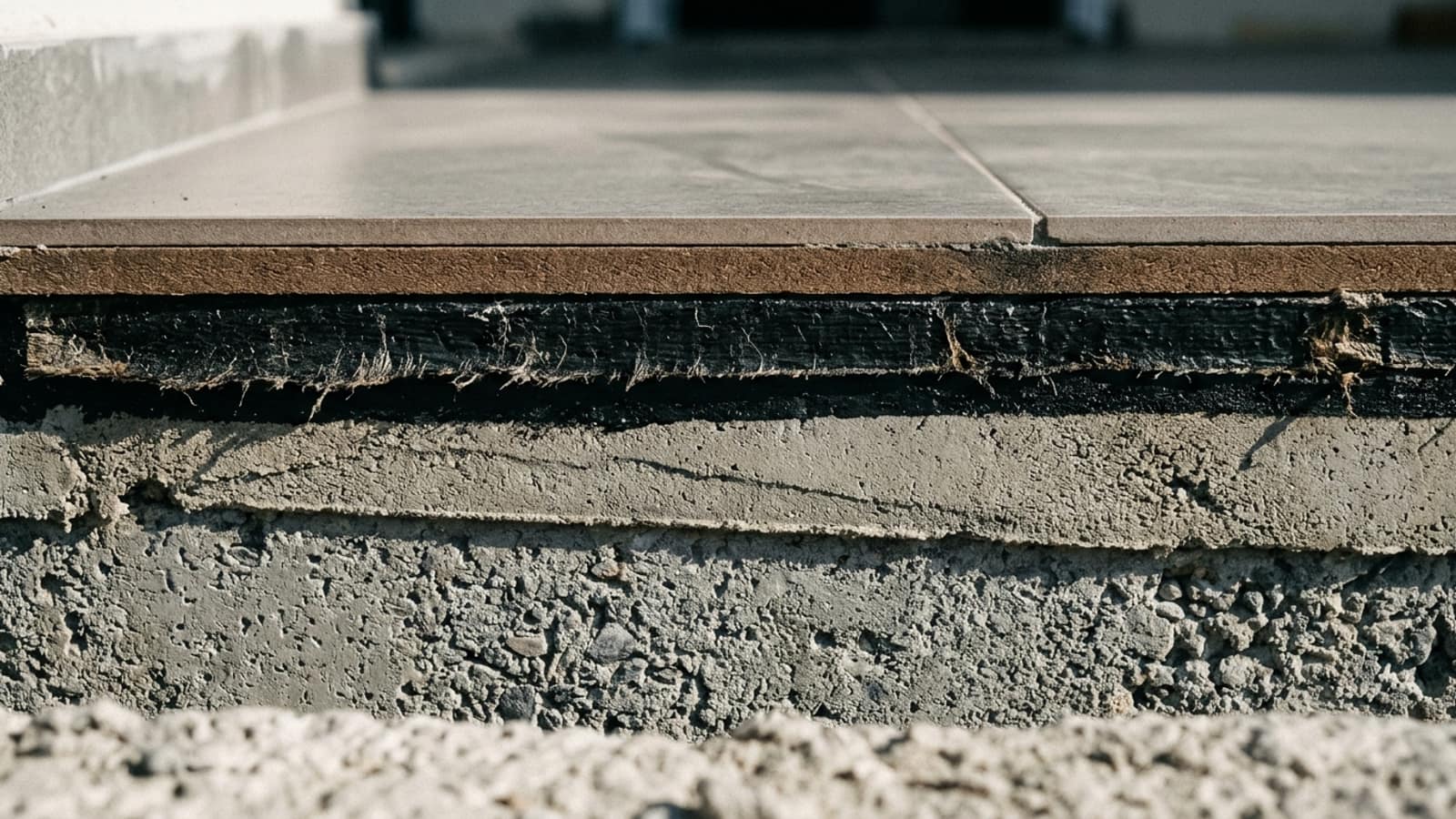
With a damp problem the first task is to identify the source. Waterproofing a leak that is really condensation, and recommending ventilation for condensation that is really a leak, are both a waste of time.

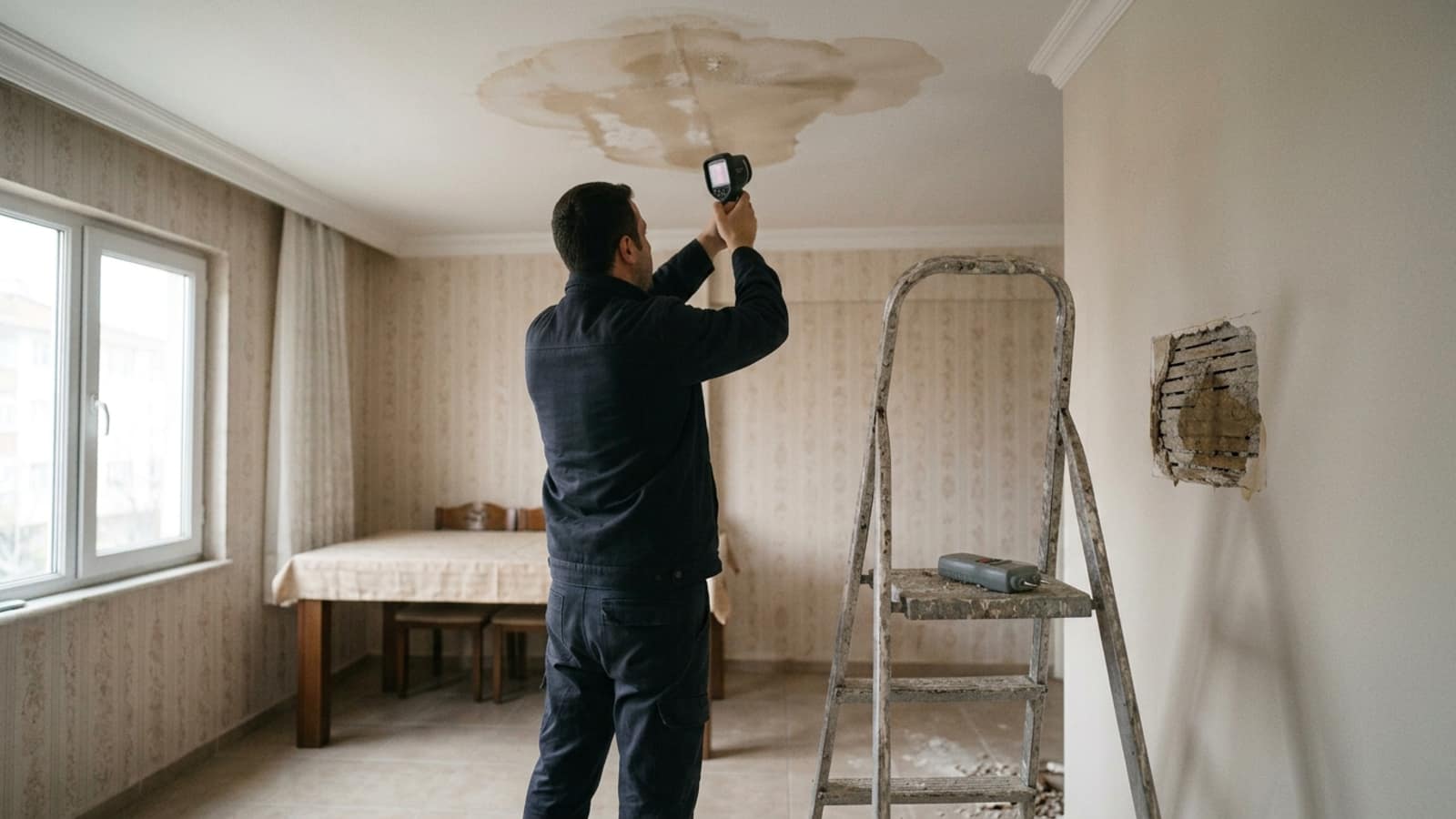
A stain on the ceiling, paint blistering at the foot of a wall, or a smell in the bathroom that will not go away. They all lead to the same question: where is the water coming from? The answer is not as simple as it looks, because water does not come out where it goes in. Water entering at one point can travel metres between layers and reach the surface somewhere entirely different.
In this article we explain how to narrow down the source of damp systematically: first telling the three main sources apart, then the simple tests you can carry out yourself at home, and finally the professional methods and the order of intervention.

With a damp problem the first task is to identify the source. Waterproofing a leak that is really condensation, and recommending ventilation for condensation that is really a leak, are both a waste of time.
Ahmet Toka, General Manager
Almost all damp problems in a home come down to one of three sources, and the solutions to the three are completely different.
A few simple tests you can carry out before calling in a specialist will narrow the problem down considerably.
If you suspect external leakage, the following are the most common points of entry.
Simple tests narrow down the source but do not always give its exact location. The methods used at that point are as follows:
These methods are generally used together; breaking out on the basis of a single method's result is not recommended.
Once the source has been established, the order to follow is clear and must not be departed from.
The most common mistake is to skip the second and fourth steps and simply paint. That conceals the problem for a few weeks and then it returns over a wider area.
Give your structures complete protection against the harmful effects of water and damp with Likit İzolasyon! With our foundation, roof, wet area and façade waterproofing services we make your buildings durable and long-lasting. Get in touch now for professional service!
Service details →Permanently stop water ingress through cracks with injection waterproofing. Trust Likit İzolasyon for effective solutions in basements, car park walls and terrace slabs!
Service details →With crack repair we bring durability and good looks to your buildings. Achieve long-lasting results by removing the causes of cracks with the professional solutions of Likit İzolasyon!
Service details →Prevent the damaging effects of leaks and damp on your concrete, retaining wall and render surfaces with cementitious waterproofing. Achieve long-lasting protection with Likit İzolasyon's two-component flexible solutions!
Service details →Usually not. Water can travel horizontally between layers from the point where it entered and emerge at the surface through a crack metres away. That is why looking at the stain and saying "it is getting in here" is often misleading; the source must be narrowed down systematically.
No. The surface drying does not mean the path the water took has closed; it only shows that there has been no rainfall in that period. The stain will return with the first heavy rain. The problem is not over until the source has been found and removed.
Prolonged exposure can trigger respiratory complaints and allergic reactions; it matters particularly for children and those with respiratory sensitivities. Cleaning mould is a temporary solution; unless the source of damp is removed, the mould comes back.
By reducing the moisture in the indoor air and eliminating cold surfaces. Regular ventilation, using extractor fans in the bathroom and kitchen, not drying laundry indoors and insulating the external walls are effective steps. Waterproofing does not solve this problem.
Turn off all the taps and take a meter reading; if the value changes, there is a hidden leak. In that case the location of the leak along the line is narrowed down with a pressure test and acoustic listening. Early detection limits both the loss of water and the damage to the structure.
Superficial jobs such as clearing a blocked drain or renewing a joint can be done. But if the source is unclear and the damp has reached the concrete, the wrong intervention both conceals the problem and makes the subsequent repair harder. In that case an on-site inspection is a better starting point.
With over 25 years of field experience, let us determine the right solution for your building together. Contact us for a survey and quotation.
Over 25 years of field experience in waterproofing, floor coatings and structural strengthening. This article is based on applications encountered on site and the standards currently in force.