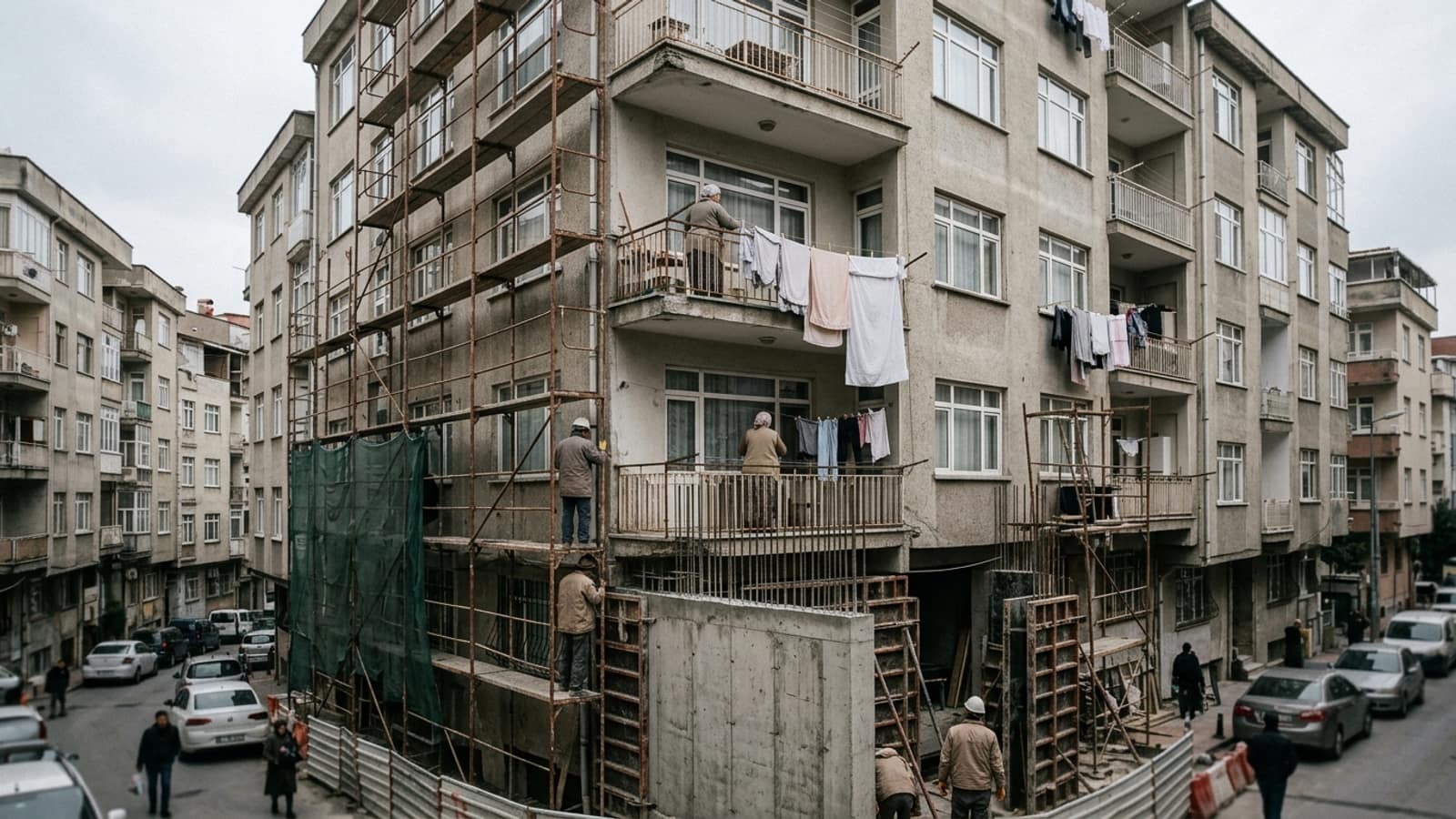
The strength of carbon fibre lies not in the fabric but in the bond. If the surface has not been correctly prepared, even the strongest fibre in the world carries no load at all.

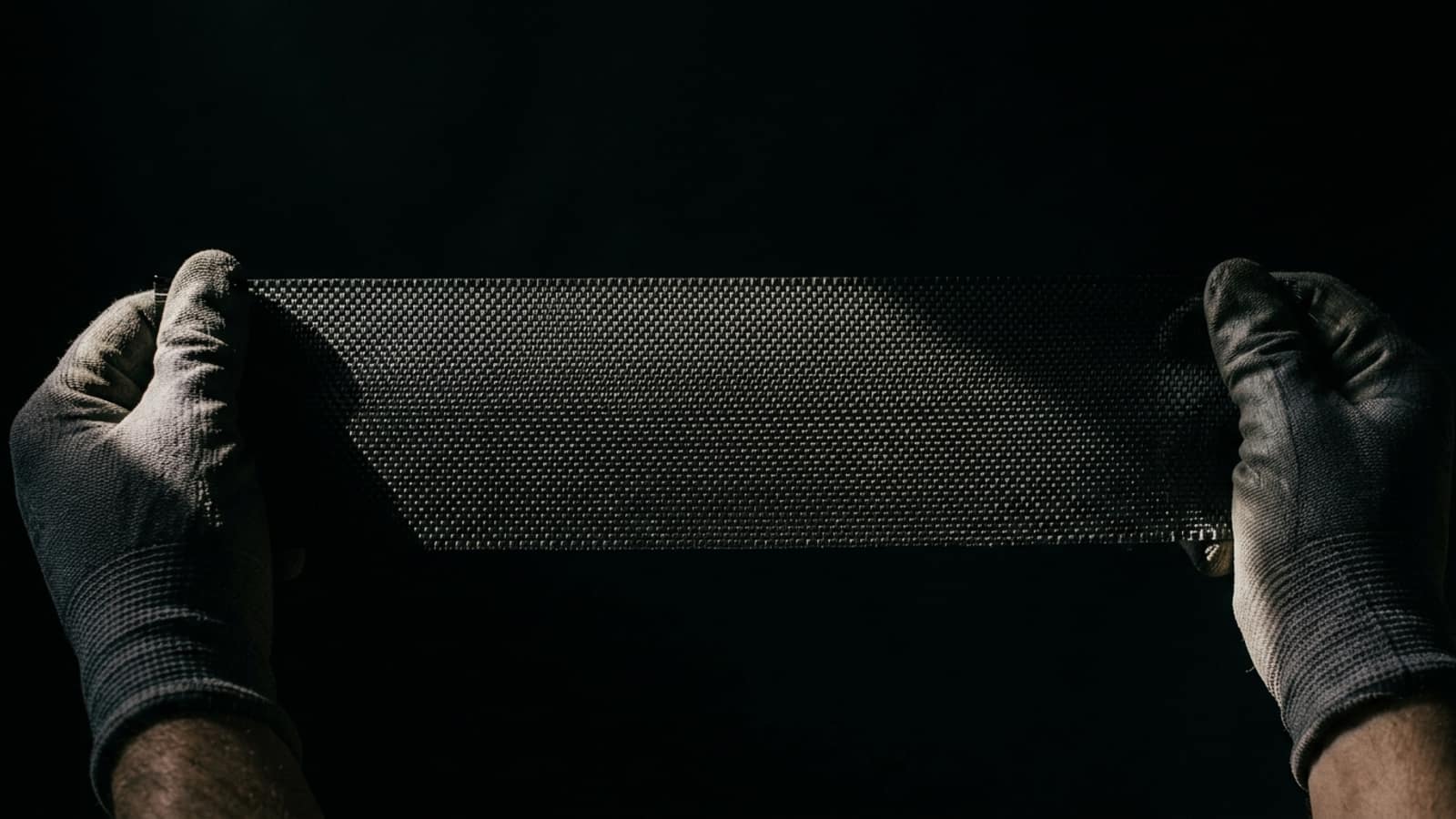
Carbon fibre polymer strengthening makes it possible to increase the capacity of a reinforced concrete member with almost no enlargement of its section. A fabric less than a millimetre thick, bonded in the right direction and in the right way, raises the flexural or shear capacity of the member significantly.
In this article we explain how the method works, the difference between fabric and laminate, how the application proceeds step by step, how quality control is carried out and where the method falls short.

The strength of carbon fibre lies not in the fabric but in the bond. If the surface has not been correctly prepared, even the strongest fibre in the world carries no load at all.
Ahmet Toka, General Manager
Carbon fibre is a material whose tensile strength is many times that of steel but whose weight is very low. On its own it is simply a fabric; its structural function emerges when it is bonded to concrete with epoxy resin. The epoxy both holds the fibres together and transfers load from the concrete to the fibre.
Carbon fibre works only in tension and is strong only in the direction of the fibres These two statements determine the whole of the application: the fabric is placed according to where the member is required to carry tensile stress and the direction of that stress. A fabric laid in the wrong direction contributes nothing at all.
Application to columns works on a different principle: when the fabric is wrapped around the column, it confines the concrete laterally. This confinement effectincreases both the axial strength of the concrete and its capacity to deform without fracturing (its ductility). In seismic strengthening this is one of the most valuable contributions.
There are two basic product forms and they are used in different places.
In practice, laminate is preferred for the flexural strengthening of beams and fabric for shear strengthening and column wrapping. Details: carbon fibre polymer strengthening.
The performance of a carbon fibre application cannot be fully assessed by eye, which is why inspection methods matter.
Carbon fibre strengthening is a powerful tool but it is not the solution to every problem. Knowing its limits is necessary for correct design.
For a comparison with other methods see structural strengthening page.
Carbon fibre strengthening stands out wherever enlarging the section is not possible or not wanted. The uses we encounter most often on site are as follows:
What these uses have in common is this: the lack of capacity is at member level. If there is a stiffness problem across the structure as a whole, carbon fibre becomes only part of the solution.
Make your structures light and durable with carbon fibre polymer strengthening. Reinforce your structures with the modern strengthening solutions of Likit İzolasyon!
Service details →We make your structures safe and durable with our structural strengthening services. Choose Likit İzolasyon for detailed analysis and professional application methods!
Service details →With reinforced concrete strengthening we make your structures durable and safe. Reinforce your structures again with the professional analysis and application solutions of Likit İzolasyon!
Service details →With concrete damage repair we bring durability and safety to your structures. Restore damaged structural elements with the professional solutions of Likit İzolasyon!
Service details →Carbon fibre itself does not corrode and its tensile strength is very high. The component that determines the life of the system is the epoxy: UV, high temperature and mechanical impact affect the epoxy. In a protected interior application the system is very long-lived.
In most cases yes. There is dust and noise during the surface preparation stage; that part can be carried out in phases. Ventilation must be provided during epoxy application. It is a far less intrusive method than jacketing or adding shear walls.
Fabric wrapped around a sharp corner experiences an excessive concentration of stress at that point and is cut through and fails. Rounding the corner to a specified radius distributes that concentration. Whether the wrapping works depends directly on this detail; it cannot be skipped.
No. The system transfers load into the concrete; an intervening layer of plaster becomes the weakest link and the bond fails there. Plaster and paint must be removed completely and the concrete surface exposed.
The material cost per square metre is higher. However, because there is no enlargement of the section there is no loss of area, the application time is short and the building can remain in use. Once these indirect gains are taken into account, the total cost turns in favour of carbon fibre on many projects.
The pull-off test results, void check records, ambient temperature and humidity measurements and epoxy mixing records are filed. These documents are the evidence that the strengthening was carried out in accordance with the design and must be in the handover file.
With over 25 years of field experience, let us determine the right solution for your building together. Contact us for a survey and quotation.
Over 25 years of field experience in waterproofing, floor coatings and structural strengthening. This article is based on applications encountered on site and the standards currently in force.